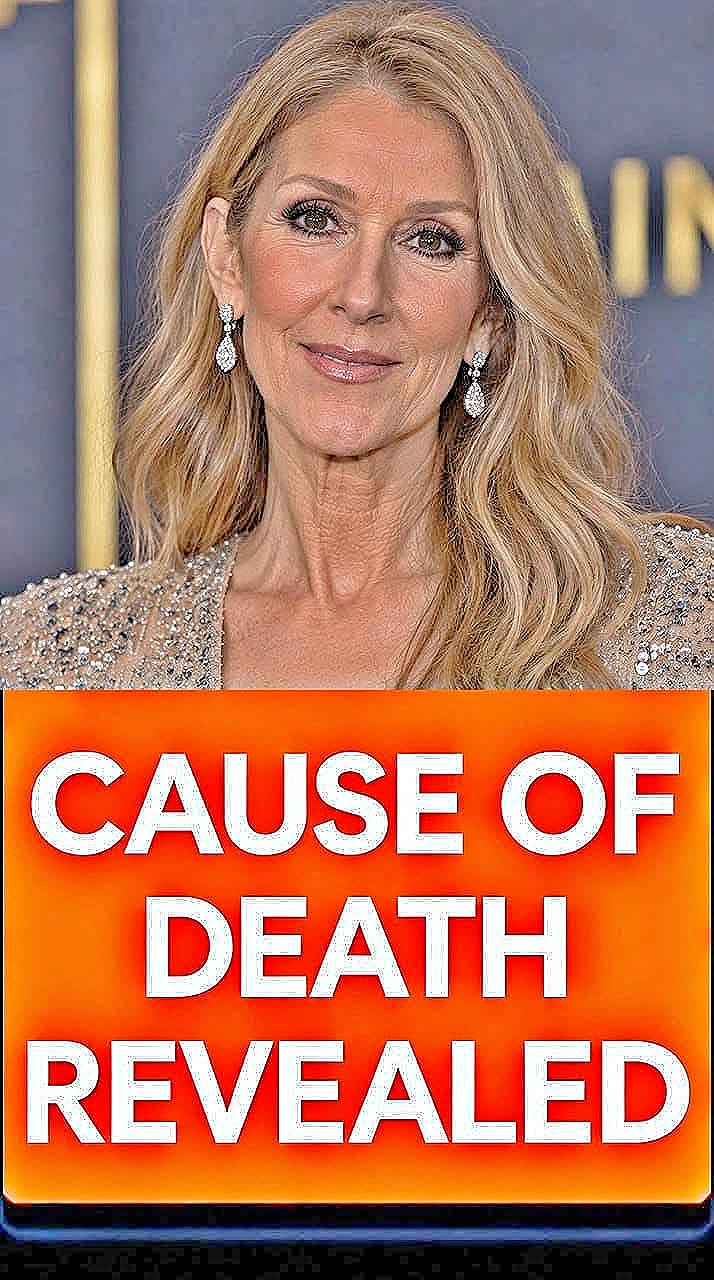
The announcement that changed how fans understood her absence
For decades, Celine Dion’s voice has been associated with extraordinary control, soaring notes and performances that make demanding music sound effortless. When she publicly disclosed her diagnosis of stiff-person syndrome in December 2022, audiences learned that the singer was facing something far more complicated than a temporary interruption to her schedule. She explained that muscle spasms were affecting different parts of her daily life, including walking and singing. The announcement gave a name to difficulties that had already disrupted her work and introduced many listeners to a condition they had never heard of.
Dion’s message was emotional, but it was also specific about what she could no longer reliably do. She said the spasms prevented her from using her voice in the way she was accustomed to and from giving audiences the level of performance she expected of herself. That distinction matters. The issue was not a loss of enthusiasm for music or a decision to step away from fans. It was a medical condition interfering with the physical abilities on which both ordinary activities and an exceptional singing career depended.
What stiff-person syndrome actually means
Stiff-person syndrome, often shortened to SPS, is a rare neurological disorder associated with muscle stiffness and spasms. It is thought to involve an autoimmune process, in which the immune system mistakenly targets parts of the body’s own functioning. Symptoms can affect the torso and limbs, making movement uncomfortable or difficult. The condition varies between individuals, so one person’s experience cannot be used to predict another’s. Understanding that variation is essential when discussing Dion: her public account provides insight into her experience, not a complete picture of every patient’s illness.
The name can make the condition sound less serious than it is. “Stiffness” may suggest an ordinary ache, but SPS can involve painful episodes that substantially interfere with mobility and daily activities. Some people become sensitive to stimuli such as noise, touch or emotional distress, which can trigger spasms. For someone living with that unpredictability, planning an outing or completing a routine task may require additional consideration. The difficulties are not limited to moments that an audience can see, and the absence of visible symptoms does not establish that a person is unaffected.
Why the condition affected her singing
Singing is a physical activity as well as an artistic one. Breath support, posture and coordinated muscular movement all contribute to producing a controlled performance. Dion explained that her spasms disrupted her ability to sing in her usual way. For an artist whose work relies on precise coordination, changes in physical control can affect much more than a single note. They can alter endurance, confidence and the ability to repeat a demanding performance consistently. Her disclosure helped explain why her condition could affect both everyday movement and the work for which she was known.
It would be inaccurate, however, to reduce her illness to a statement that she had permanently “lost her voice.” Her own account described difficulties using it as she normally would, which is different from establishing that singing was no longer possible under any circumstances. That distinction leaves room for treatment, adaptation and meaningful progress without making promises about the future. It also avoids turning a complicated medical situation into an absolute headline. A person may experience serious limitations while still retaining abilities that can emerge differently at different times.
The struggle began before the public diagnosis
In her 2024 documentary, I Am: Celine Dion, Dion said she had experienced symptoms for approximately 17 years. That disclosure added another dimension to the story. The public diagnosis was not necessarily the beginning of her difficulties; it was the point at which audiences received an explanation. Her account suggests a long period of living with symptoms while continuing a highly demanding career. It also helps explain why a diagnosis can carry both distress and significance: naming a condition can clarify what has been happening, even when it does not immediately solve the problem.
Rare neurological conditions can be difficult to identify, and SPS may be mistaken for other disorders. Diagnosis generally involves a neurological assessment and additional testing, interpreted together rather than relying on one symptom alone. Dion’s experience should not encourage readers to diagnose themselves from a celebrity’s story. Muscle stiffness and spasms can have different causes. The relevant lesson is the importance of appropriate medical evaluation when symptoms persist or interfere with daily life—not the assumption that a familiar description means someone has the same condition.
A documentary that showed more than the stage
The documentary offered viewers a different perspective from a concert film or a celebration of career highlights. It showed the work and uncertainty involved in managing illness, including a difficult episode during a physical therapy session. The contrast with Dion’s familiar stage presence was considerable. Audiences accustomed to seeing her command a performance instead saw her receiving help during a moment when her body was not responding as she wanted. The scene made the effects of the condition tangible without requiring viewers to understand every medical detail.
Dion chose to keep that vulnerable footage in the film, according to reporting about the documentary’s production. That decision gave the public a candid view of something she could have kept private. It should not create an expectation that other patients must expose difficult moments to be believed or understood. Her openness was a personal choice. Its value lay in helping viewers recognize the seriousness of the condition and the humanity of the person experiencing it, rather than providing an opportunity to watch suffering as spectacle.
The severe episode was a spasm—not a seizure
One of the documentary’s most widely discussed scenes showed Dion experiencing an intense muscle spasm while professionals attended to her. Her physician later clarified that the episode was not a seizure. That correction is important because the two terms describe different medical events and should not be used interchangeably. The scene could be distressing to watch, but its appearance alone did not provide a reliable basis for assigning a diagnosis. Accurate reporting requires using the explanation supplied by the clinician rather than choosing the most dramatic label.
Dion spoke afterward about the embarrassment of losing control of her body. That response revealed an emotional consequence beyond the physical pain. Public discussion of illness often concentrates on symptoms and treatment while overlooking how frightening or exposing an episode can feel to the person experiencing it. Her remarks offered a reminder that medical distress is not merely something happening to muscles or nerves. It can affect a person’s sense of autonomy and security, particularly when they cannot predict how their body will respond.
Treatment is about management, not a simple cure
There is currently no established cure for stiff-person syndrome, but that does not mean treatment offers nothing. Care may include medicines to reduce stiffness and spasms, therapies directed at the immune system and rehabilitation tailored to the individual. The aim is to improve symptoms, preserve function and support quality of life. What is suitable depends on clinical assessment. A general description of available treatments should not be mistaken for confirmation that Dion receives every option mentioned or that a particular approach would be appropriate for someone else.
Progress can also be uneven. Improvement in one area does not necessarily mean all symptoms have resolved, and a difficult period does not automatically mean treatment has failed. This makes simple “recovered” or “deteriorating” labels unreliable when they are based on isolated appearances. Chronic conditions often require continuing management and adjustment. Dion’s story is better understood through that framework than through a search for one decisive moment when everything either becomes normal again or is declared hopeless. Both extremes can misrepresent the reality of living with illness.
The work behind visible progress
When she first announced her diagnosis, Dion described working with medical professionals and a sports medicine therapist to rebuild strength and her ability to perform. She also acknowledged that it was a struggle. Those remarks placed effort and support at the center of the process. They did not suggest that determination alone could control the disease. Rehabilitation involves professional guidance, practical goals and attention to how a person responds. The work may be repetitive and private, far removed from the public occasions on which progress becomes visible.
For an audience, a performance can seem like a sudden transformation because it is the first moment they see. Behind it may be a lengthy period of treatment and preparation. That difference between visible achievement and unseen work is important in Dion’s case. Applauding her musical accomplishments should include respect for the support required to make them possible. It should not become a reason to expect her to produce another performance on demand or to question the seriousness of her condition whenever she appears capable and composed.
Her children and the importance of support
Dion has acknowledged the support of her children as part of her experience. Their role belongs to a wider picture in which illness affects family life as well as professional activity. The public does not need access to private conversations to understand that close relationships can matter during difficult treatment and adjustment. Her account allows recognition of that support without inventing scenes, assigning feelings to her children or presenting the family’s experience as though every detail were known.
Support also does not require constant reassurance that everything will be fine. It can include practical assistance, companionship and respect for limits. For someone managing a condition that affects daily functioning, being allowed to have difficult days can be as important as encouragement. The same principle applies to fans. Expressions of affection can be meaningful without demands for updates, explanations or proof of recovery. A singer who has shared part of her medical experience still has the right to decide which parts remain personal.
Paris offered a remarkable musical moment
At the Paris 2024 Olympic opening ceremony, Dion sang Édith Piaf’s “Hymne à l’amour” from the Eiffel Tower. The performance marked a significant public return after the interruption caused by her illness. Its emotional power came from the music itself and from what audiences understood about the difficulties she had described. Here was a singer who had spoken openly about the loss of familiar physical control, once again delivering a performance on an international stage. It was a meaningful achievement and an important moment in her public story.
It was not, however, medical evidence that SPS had disappeared. A successful performance demonstrates that someone could perform on that occasion; it does not establish that they can resume every previous activity, sustain an unrestricted schedule or stop treatment. Maintaining that distinction does not diminish the achievement. It makes the celebration more accurate. Dion’s performance could be extraordinary precisely because it occurred within the context of a serious condition—not because audiences needed to imagine that the condition had been permanently overcome.
What her story reveals about invisible illness
Dion’s experience illustrates the gap between appearance and health. Someone may look well in a photograph or speak confidently during an interview while continuing to manage substantial symptoms. Conversely, footage of a severe episode does not describe every moment of their life. Both kinds of images are incomplete. Treating either as the whole truth can lead to harmful assumptions: that a person must be healthy because they look composed, or that one difficult scene determines everything they will ever be able to do.
Her public disclosures have also brought attention to people living with SPS outside the world of celebrity. Those patients may face uncertainty, limited awareness of their condition and difficulty explaining symptoms to others. Visibility can help improve understanding, but it should not establish a celebrity’s achievements as a standard everyone must meet. Different people have different symptoms, access to care and practical circumstances. A patient’s worth is not measured by whether they return to a public stage, resume a demanding career or produce a visibly inspiring outcome.
The reality behind the dramatic headlines
The most significant truth about Dion’s health battle is not a hidden scandal or an undisclosed explanation for her illness. It is the reality she has chosen to describe: a rare condition that interfered with daily life, affected the work she loves and required sustained medical support. Her documentary made that experience more visible, while her later Olympic performance showed that meaningful achievement could coexist with continuing uncertainty. Neither part of the story needs exaggeration. The documented facts are already powerful enough.
Celine Dion remains more than a diagnosis and more than a symbol of perseverance. She is an artist, a mother and a person entitled to care and privacy. Her openness has helped audiences understand that strength can include vulnerability, treatment and accepting assistance. The voice that made her famous is an important part of her life, but her dignity does not depend on delivering another perfect note. The most respectful response to her story is to appreciate the music, recognize the seriousness of the illness and leave room for a future that cannot be reduced to a headline.