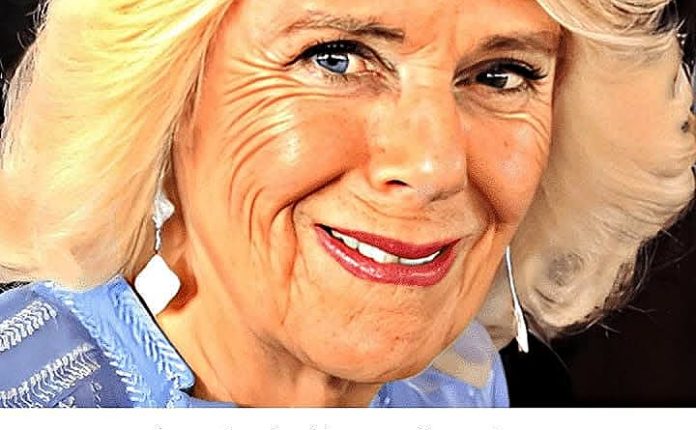
For decades, audiences knew Melody Thomas Scott as Nikki Newman—the glamorous, resilient woman at the heart of The Young and the Restless. But behind that familiar television image was a personal history of hardship that remained largely private until Scott chose to tell her own story.
- Scott joined The Young and the Restless in 1979 and made Nikki Newman one of daytime television’s most recognizable characters
- Her long-running role brought professional stability, public recognition and generations of devoted viewers
- The polished image audiences saw did not reveal the full complexity of her life
- For years, Scott kept painful experiences separate from her public identity
- Her memoir gave readers a more personal understanding of the woman behind Nikki
- Her story is a reminder that lasting success and private hardship can exist side by side
The familiar face millions thought they knew
For millions of viewers, Melody Thomas Scott became almost inseparable from Nikki Newman. Her voice, expressions and presence were familiar parts of a television series that audiences followed for years, sometimes across generations. Since joining The Young and the Restless in 1979, Scott helped give Nikki an enduring place in daytime drama. The character experienced complicated relationships, emotional upheaval and repeated reinvention. Through it all, Scott remained a recognizable presence, bringing continuity to a fictional world built around constant change.
That familiarity could make it feel as though viewers knew the actress herself. They had watched her express grief, anger, affection and determination through Nikki. They had followed the character’s relationships and invested emotionally in her future. But knowing a performance is not the same as knowing the person delivering it. Scott’s professional life was visible; much of her personal history was not. The distinction became clearer when she eventually shared experiences that had long remained outside the public account of her career.
Nikki Newman became more than a glamorous character
Nikki’s appeal was never limited to appearance. She could be polished and self-assured, but she could also be uncertain, wounded and vulnerable. Scott’s performance allowed those qualities to exist together. The character’s strength did not prevent her from struggling, and her difficulties did not make her incapable of continuing. That emotional range helped audiences remain interested in Nikki over time. She was not simply an elegant figure moving through dramatic storylines; she was someone viewers could recognize as complicated within the heightened world of a soap opera.
Creating that balance over decades required more than repeating a familiar performance. Nikki changed as the series changed, and Scott continued finding ways to make those developments feel connected to the same character. Long-running roles depend on consistency, but they also demand flexibility. An actor must preserve what audiences recognize while making room for new circumstances and emotions. Scott’s longevity reflected that ongoing work. What could appear effortless from a living room was the result of sustained professional commitment.
A career that became part of family routines
Some viewers first encountered Nikki Newman as children watching alongside a parent or grandparent. Others discovered the series later and developed their own attachment to its characters. In that way, Scott became familiar to more than one generation. Her presence belonged not only to television history but also to ordinary domestic routines: afternoons at home, conversations about the latest storyline and memories of people with whom the show had been watched. That kind of connection is unusual, even within entertainment.
It can also create a misleading sense that everything important about a performer must already be known. When a face has appeared regularly for decades, audiences may assume there are few surprises left. Yet repeated visibility does not amount to a complete biography. Scott could appear in interviews, attend events and discuss her work without revealing every difficult chapter of her life. Public familiarity and personal privacy were not opposites. They existed together throughout much of her career.
Success told only part of the story
From the outside, Scott’s life carried recognizable signs of achievement. She had a lasting role on a major television series, a devoted audience and an established place in daytime entertainment. Those accomplishments were genuine. Her career was not an illusion, and acknowledging hardship does not make it less remarkable. But professional success provided only one view of her life. It could show what she had built without explaining everything she had experienced before or alongside it.
People often read visible outcomes as evidence of an uncomplicated life. A secure career can look like proof that earlier difficulties have been resolved. Public confidence can be mistaken for the absence of pain. Recognition can seem like a final answer to everything that came before it. Scott’s story challenged those assumptions. The woman audiences admired had achieved lasting success, but that success did not erase her past or make every part of her personal experience available to the public.
Privacy was part of her life, too
For years, Scott did not publicly reveal the full extent of her difficult experiences. Much of that history remained separate from the image associated with her television work. It is important not to interpret that privacy as dishonesty or to assume that a public figure owes an audience immediate disclosure. Personal experiences do not become public property simply because someone is famous. Scott had the right to decide whether to speak, what to share and when she was ready.
There is no universal timetable for telling a painful story. Some people speak openly soon after an experience; others wait many years or never discuss it publicly. The time that passes does not determine whether the experience matters. Nor does a long silence tell outsiders everything about the reasons behind it. Scott’s eventual decision to share her history should be understood as her choice, rather than treated as the resolution of a mystery that fans were entitled to investigate.
Her memoir introduced a different perspective
When Scott chose to write about her life, readers were given a perspective that television had never been designed to provide. The memoir was not another Nikki Newman storyline or a polished account of career milestones alone. It allowed the actress to describe a personal history that complicated the image many people had formed. Fans who knew her primarily through professional success could begin to understand that her life contained experiences far removed from the glamour associated with her role.
For longtime viewers, that distinction could be startling. They recognized her instantly and knew the fictional events that had shaped Nikki’s life, yet they had known much less about Scott’s own history. The memoir did not reveal that their admiration had been misplaced. It showed that it had been based on an incomplete picture. The actress they respected was still the same accomplished performer, but readers now had another way to understand the person whose work had been familiar for so long.
Performing emotion is different from sharing it
An actor can portray vulnerability while remaining separated from the scene by a script, a character and a professional setting. The emotion may be convincing, but the events belong to a fictional story. Personal disclosure removes that particular distance. When Scott wrote about her own experiences, she was not speaking through Nikki. She was deciding how to describe events that belonged to her life, knowing that readers could respond to them in ways she could not fully control.
That choice represents a different kind of courage from performing before a camera. It does not mean acting is easy or that every personal revelation must be celebrated without thought. It means the risks are different. A memoir asks the writer to step beyond the public role and speak as an individual. For Scott, whose identity had become closely associated with a beloved character, that distinction was especially meaningful. She was making space for her own voice alongside the one audiences already recognized.
Fame did not rewrite the past
Scott’s account offered a reminder that achievement and hardship are not mutually exclusive. A person can create a successful career while carrying memories that remain painful. They can appear composed in public without every part of their private life being settled. These realities do not contradict each other. The mistake is expecting success to function as a complete explanation of someone’s well-being—or assuming that a polished appearance proves there is nothing difficult beneath it.
Her story should not be reduced to a claim that professional success healed everything. Nor should it suggest that hardship was necessary to make her talented. The career and the personal history are distinct parts of the same life. Both deserve acknowledgment without turning one into a convenient explanation for the other. Scott’s achievements remain impressive on their own. Learning more about what she experienced adds context, but it does not require romanticizing pain or treating suffering as a qualification for artistry.
The parallels with Nikki have limits
Once readers learned more about Scott’s life, Nikki’s resilience could take on additional meaning for them. The character had repeatedly faced upheaval and found ways to continue. It was understandable that audiences might notice a broad parallel between that fictional persistence and the actress’s personal endurance. But the comparison has limits. Nikki’s experiences were created by writers, while Scott’s history belonged to a real person. One should not be used to simplify the other.
Knowing more about an actor may change the way a viewer watches a familiar scene, but it does not establish that the performance was autobiographical. Scott’s portrayal involved craft, interpretation and the demands of a long-running role. Her personal experiences should not become a shortcut for explaining every expression or emotional moment. Appreciating the fuller person also means respecting her work as work. She was not simply revealing herself through Nikki; she was creating a character with a separate fictional life.
Telling the story in her own words
A memoir can offer a person greater control over a story that has otherwise been told through career coverage, public appearances and other people’s impressions. Scott could choose the experiences she wanted to discuss and place them within the context of her life. That did not make the book a complete record of everything she had ever felt or encountered. No memoir can do that. It did, however, give readers access to an account shaped by her own perspective rather than by the assumptions attached to fame.
For someone known so strongly through one character, that opportunity carries particular weight. Scott could speak as Melody Thomas Scott rather than being discussed primarily as the woman who played Nikki Newman. The distinction did not require rejecting the role that had defined so much of her professional life. It allowed the role to take its proper place within a larger identity. Nikki remained central to her career, but the actress’s life extended before, alongside and beyond the fictional world of Genoa City.
Admiration became more complicated—and more human
Learning about Scott’s history gave fans an opportunity to reconsider what admiration means. They could continue appreciating her performance while recognizing that public confidence does not reveal every private struggle. That fuller understanding need not become pity. It can instead become respect for a person’s complexity, including the experiences she chose to discuss and the parts of her life that remained her own. The memoir invited readers to see more, not to assume that they now knew everything.
Her account also carried a lesson that extends well beyond Hollywood. People are often judged by their most visible circumstances: a successful job, an attractive appearance or an apparently stable life. Those details may be real, but they cannot explain an entire person. Scott’s story showed how much can exist outside the frame. It encouraged a more careful view of others—one that leaves room for experiences they have not shared and does not mistake an outward impression for complete knowledge.
A legacy larger than one role
Nikki Newman will remain an essential part of Melody Thomas Scott’s professional legacy. The character brought her into millions of homes and gave her a place in decades of daytime television. That achievement does not become smaller when her personal history is acknowledged. Instead, the account becomes more complete. There is the actress who sustained an enduring role, and there is the individual who eventually chose to discuss difficult experiences in her own words. Neither needs to erase the other.
The most meaningful part of Scott’s story is not that the glamour was false. It is that the glamour was never the whole picture. Behind a familiar television presence was a life containing achievement, hardship, privacy and personal choice. By sharing more of that life, she reminded audiences that a public image is only one layer of a human being. Fans had known Nikki Newman for generations. Scott’s memoir gave them a chance to recognize that the woman behind her had a story of her own.