Part 3: The Price of Independence
The next morning, my phone became a battlefield. My daughter, my son, and their spouses were calling in rapid succession, their voices escalating from confused to frantic, and finally, to pure, unadulterated rage. I sat on the balcony, took a deep breath, and finally answered my daughter’s fifth call.
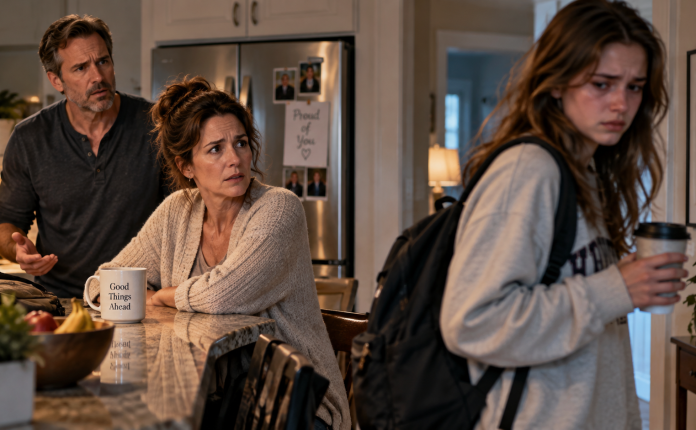
“Mom! Do you have any idea what you’ve done?” she shrieked, her voice thin and hysterical. “We’re stuck with the kids at a hotel that doesn’t allow guests under twelve! We have to drive back tonight! You have completely ruined Christmas!”
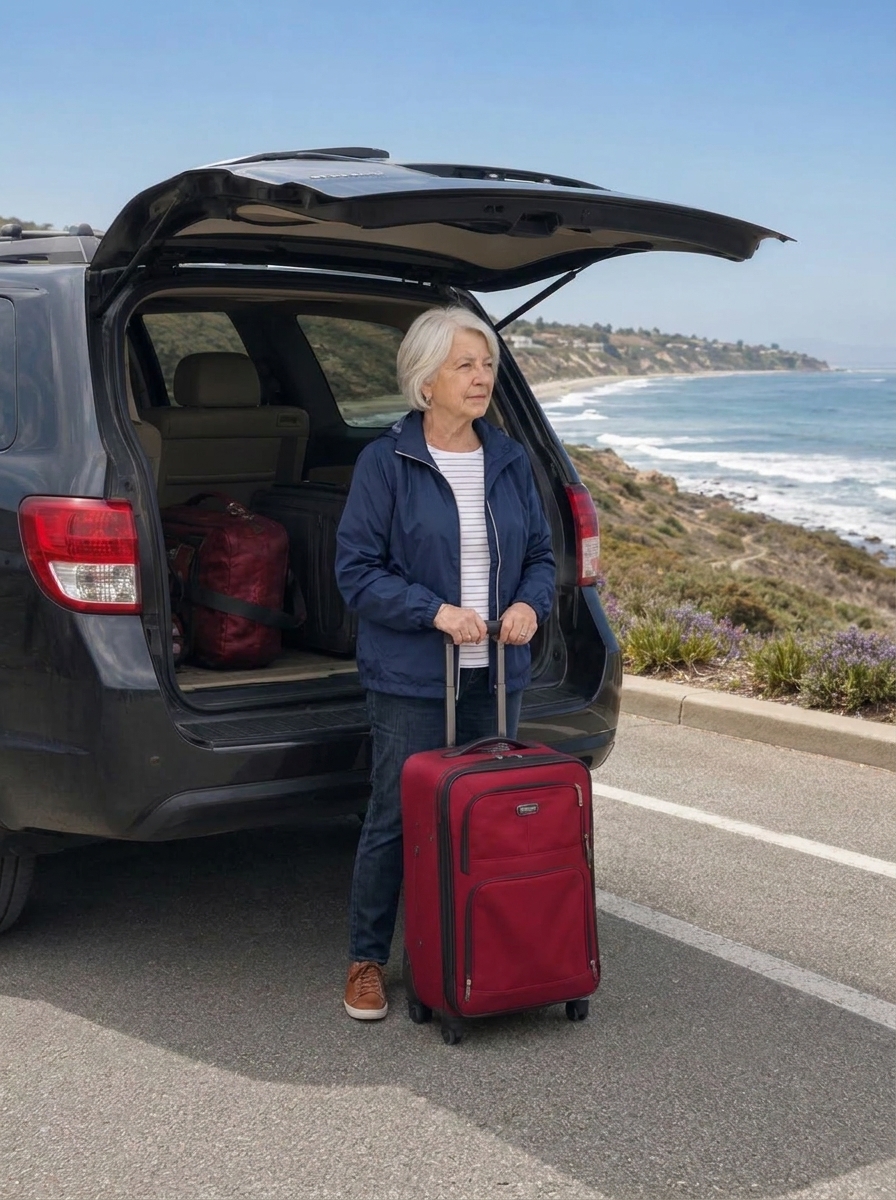
I didn’t raise my voice. I didn’t even lean forward. I simply watched a seagull circle the pier.
“I haven’t ruined Christmas, honey,” I said, my voice steady. “I have simply opted out of yours. The pantry is empty. The beds are locked. You assumed I would be there to facilitate your freedom, but you never stopped to consider that I might want a little freedom of my own.”
“You’re being selfish!” my son interjected, his voice booming through the speaker. “You’re the grandmother! This is what you do! You’re supposed to be the anchor of this family, and you’ve just abandoned us at the last minute!”
“This is what I did,” I corrected, my heart feeling lighter with every syllable. “For twenty years, I spent every Christmas morning cleaning up your wrapping paper and every Christmas night washing your dishes while you went off to have ‘fun.’ You treated me like a live-in nanny who pays for the privilege of being used. Well, the nanny has resigned, and the doors are officially locked.”
“We’ll never forgive you for this!” my daughter hissed.
“That is your choice,” I said, feeling a strange, hollow sort of peace. “But keep this in mind: I’ve already donated the presents I bought for the children to the local shelter here. They’ll be much better appreciated by people who don’t view others as mere accessories to their holiday plans. My money, my time, and my sanity no longer belong to you.”
“You can’t just cut us off!” my son shouted, his desperation finally showing through the anger. “What about the traditions? What about the family legacy you always talked about?”
“The ‘tradition’ was me doing all the work while you took all the credit,” I replied, my voice hard and unforgiving. “And as for the legacy, I’ve decided to start a new one—one where I actually get to enjoy my life before it’s over. You have had decades of my generosity, and you repaid it with indifference. That chapter is closed.”
“Mom, please,” my daughter’s voice softened, trying a different tactic. “Think about the children. They’re crying. How can you be so heartless?”
“It’s not heartless to demand respect,” I said firmly. “If you were actually teaching them to love their grandmother, they wouldn’t be crying because I’m not there to serve them; they would be crying because they missed me. The fact that they are upset about the logistics of your holiday tells me exactly how you’ve been talking about me when I’m not around.”
I ended the call and finally turned the phone off. I didn’t just mute it; I powered it down, watching the screen go black as a symbol of the connection I was finally severing.
The rest of the holiday was quiet. I walked the beach, I read books I had been meaning to start for years, and I ate dinner in a restaurant where I didn’t have to cook a single thing or worry about who was sitting at the table. I sat alone, but I felt a sense of belonging to myself that I hadn’t felt in nearly four decades. I watched families around me—parents laughing with their children, children playing with their toys—and I realized that I didn’t miss the chaos. I missed being treated like a human being, and for the first time in a long time, I was treating myself with the respect I deserved.
When I finally returned home on December 27th, the house was silent. There were no presents, no debris, no lingering resentment—just the quiet, clean space I had created for myself. I found a pile of angry notes taped to my front door, letters demanding to know why I had “abandoned” them, but I simply dropped them into the recycling bin without reading them. I didn’t need their explanations, and I certainly didn’t need their forgiveness for choosing my own happiness.
My children eventually stopped calling when they realized the “free service” was truly closed for business. They didn’t understand the betrayal they felt, because they didn’t understand that for years, I had been the one being betrayed—overlooked, undervalued, and expected to disappear into the background of their lives.
The following year, they didn’t even ask to come over. They held Christmas at my daughter’s house, and for the first time in my life, I wasn’t there to organize the menu or clean up the mess. I spent that Christmas in a small cabin in the mountains, enjoying a cup of coffee while watching the snow fall on the pines. I was alone, but I wasn’t lonely.
I had finally learned that the most important gift you can give yourself is the permission to stop being a martyr for people who never bothered to say thank you. The table was empty, the house was quiet, and for the first time in sixty-seven years, my life was truly, completely my own. I realized then that the silence I had been so afraid of was actually a symphony of freedom, and as I looked out at the mountains, I knew I would never, ever go back to being the person they expected me to be.
The transition was complete, the boundaries were set, and I was finally, wonderfully, at peace with the woman I had become. I realized that my value was never tied to their convenience, and the hollow feeling in my chest had been replaced by a sturdy, unshakable confidence. Every day since has been a testament to the fact that you are never too old to build a life that actually belongs to you. And as I sat on my porch, I knew that even if the world around me kept turning, I was finally the one at the center of my own orbit, and it was a view I would never trade again.