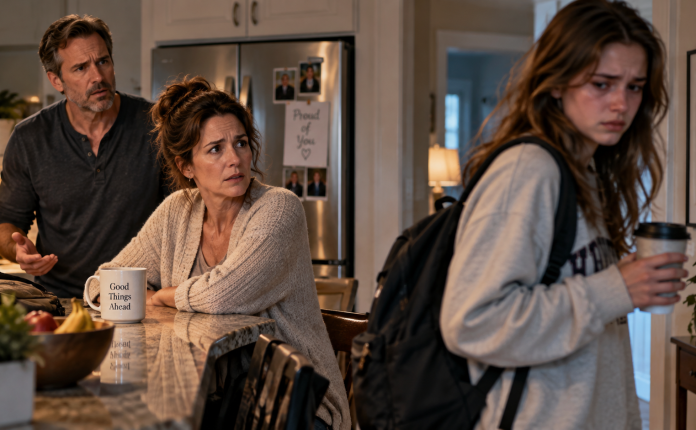
Detective Reyes took my statement in full that night while a second officer sat with Ava and Lucas in a separate room, a children’s advocate gently coaxing details from Ava about how long the locked door and empty refrigerator had really been part of their daily life. What she described broke something in me that I don’t think will ever fully heal: weeks, not days, of being left alone for hours, of Patricia screaming at them over spilled juice, of threats that she would “send them away” if they told me anything when I called from my business trips.
Patricia was arrested that night on charges of child endangerment and abuse, but Reyes made it clear the far more serious investigation was only beginning. Within days, detectives pulled the pharmacy records Patricia had referenced so confidently in that laundry room, and they matched exactly what she’d said: she had picked up Emily’s prescription refill three days early, using the emergency contact authorization Emily had given her years earlier during a different, far more innocent chapter of their friendship.
The original toxicology report from Emily’s death had listed cause of death as a sudden cardiac event linked to a rare pre-existing condition, something doctors said could have been triggered by nothing more than bad luck. But with Patricia’s own words now on record, the medical examiner’s office agreed to exhume additional tissue samples for expanded toxicology testing, a request Reyes warned me could take months and might still come back inconclusive given how much time had passed.
“I need you to prepare yourself for either outcome,” Reyes told me gently. “Sometimes these cases don’t give families the clean answer they’re hoping for.”
I sat with that uncertainty for eleven weeks, working from home so I never had to leave Ava and Lucas with anyone outside our immediate family again. My sister, Colleen, moved in temporarily to help while I worked with a family therapist named Dr. Whitfield, who specialized in children recovering from prolonged neglect. Ava had nightmares most nights those first few weeks, waking up convinced the laundry room door was locked again even in our own quiet house. Lucas, too young to fully articulate what had happened, clung to me constantly, refusing to be set down even for a few minutes at a time.
“This isn’t something that heals in a straight line,” Dr. Whitfield told me during one of our sessions. “Ava needs to relearn that hunger gets answered, that locked doors aren’t permanent, and that adults keep their promises. That takes time and enormous consistency.”
I gave her exactly that. I made a point of asking both kids what they wanted to eat, letting them see the refrigerator stocked, letting Ava help me cook so she could watch food appear from start to finish without fear attached to it. Slowly, over weeks, her shoulders started to unclench in the kitchen instead of tensing the moment she smelled dinner cooking.
The expanded toxicology results came back in the twelfth week, and Detective Reyes called me personally rather than making me wait for a letter. The samples showed elevated levels of a substance consistent with the medication interaction Patricia had described, a discovery that, combined with the pharmacy pickup records and her own recorded confession, gave prosecutors enough to move forward with a homicide charge in addition to the existing child abuse charges.
“I need to be honest with you,” the prosecutor, a woman named Ms. Delacroix, told me during our first meeting. “Cases built partly on a confession made in anger, without a recording device running, can be challenging. But between the pharmacy records, the toxicology match, and your own testimony about exactly what she said and how she said it, we believe we have a strong case.”
The trial took nearly a year to reach the courtroom. Patricia’s attorney argued the toxicology findings could be explained by cross-contamination during the exhumation process, and that her client’s statement in the laundry room had been “an act of manipulation, not confession,” meant only to frighten a man she knew was already unstable with grief. But the pharmacy records told their own quiet story that was harder to argue away, showing Patricia’s signature on a refill authorization form dated three days before Emily’s death, filled out for a dosage adjustment no doctor had ever approved.
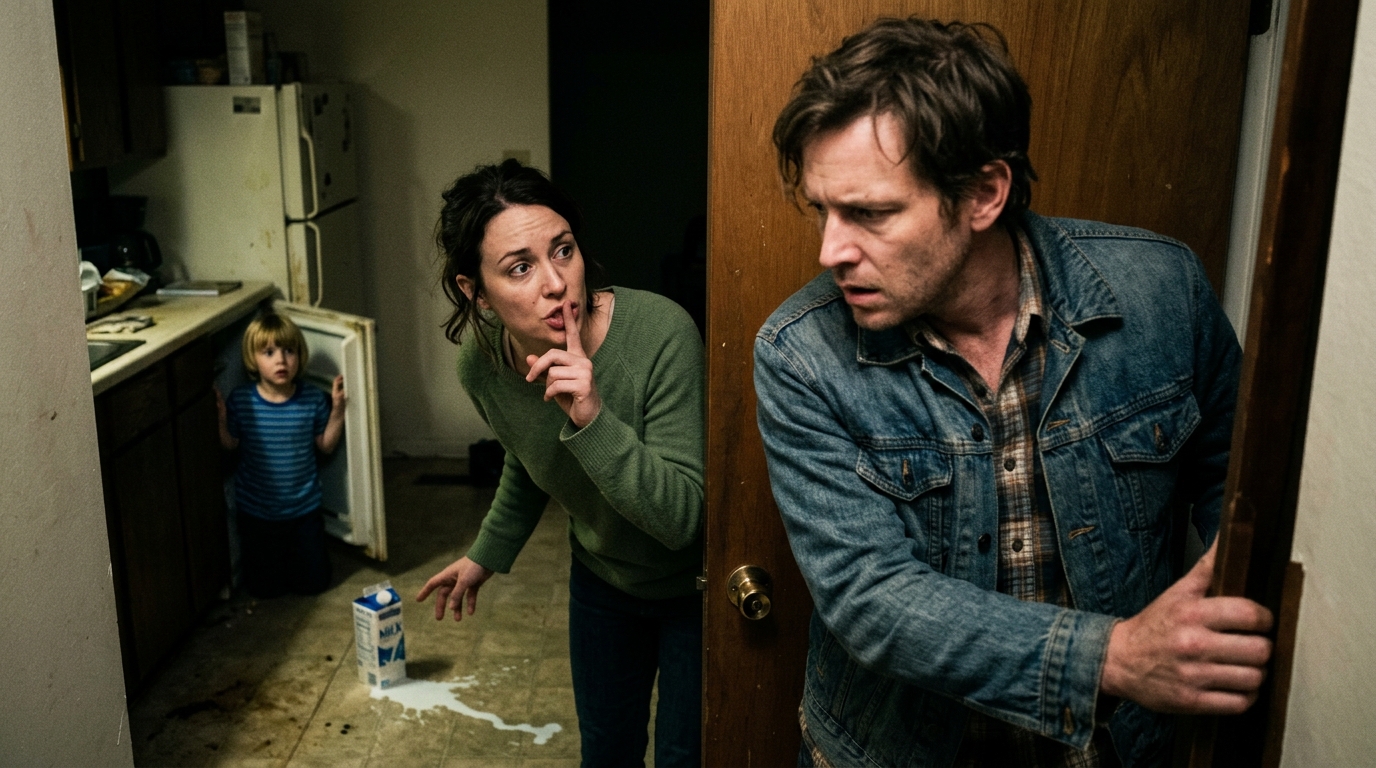
I testified for nearly two hours, describing that Thursday night in detail: the spilled milk, Ava’s voice through the door, the exact words Patricia used before I stopped her from finishing her sentence. Ava, at Dr. Whitfield’s careful recommendation and with the court’s accommodation for child witnesses, provided a recorded statement rather than testifying in person, describing in her own small voice what the weeks locked in that house had actually looked like.
The jury deliberated for four days. When they returned, Patricia was found guilty of involuntary manslaughter regarding Emily’s death, the jury unconvinced beyond reasonable doubt that the poisoning had been fully premeditated but certain the negligent, reckless tampering had directly caused it, along with guilty verdicts on all counts of child endangerment and abuse related to Ava and Lucas. She was sentenced to eighteen years, with the judge specifically noting the particular cruelty of exploiting a grieving family’s trust as an aggravating factor in sentencing.
“I hope you understand someday that I never meant for it to go this far,” Patricia said during her sentencing, turning to look at me from across the courtroom. I didn’t answer her. I had nothing left to give her, not even anger.
In the months that followed the verdict, I focused everything on rebuilding a version of home that felt safe again. I sold the house where the laundry room door had been locked, unable to walk past that hallway without hearing Ava’s voice through it, and we moved into a smaller place across town with Colleen staying close by to help. Ava started seeing Dr. Whitfield twice a week instead of once, and slowly, the nightmares became less frequent, then rare, then eventually stopped altogether by early spring.
I also began the difficult, necessary work of separating Emily’s memory from everything Patricia had done in her name. I framed old photographs of Emily throughout the new house, told Ava and Lucas stories about their real mother that had nothing to do with how she died, and made a point of celebrating her birthday every year with something joyful rather than solemn, the way Emily herself would have wanted it.
“Tell me about Mom again,” Ava asked one evening, curled against my side on the couch, no locked doors anywhere in the house, the refrigerator humming steadily in the next room. “The story about the ladybugs.”
I told her again, the way I had a dozen times already, about the summer Emily spent an entire afternoon helping four-year-old Ava build a “ladybug hotel” out of an old shoebox, convinced they were saving an entire species from extinction one leaf at a time. Ava laughed at the same parts she always laughed at, and Lucas, too young to remember his mother directly, listened anyway, absorbing pieces of her through every story I gave him.
One year after that Thursday night, Ava turned seven at a small backyard party filled with cousins, sunlight, and an entire table of food she got to choose herself, down to the very last snack. She blew out her candles surrounded by people who had never once locked a door against her, and when she caught my eye across the yard, she smiled the easy, unguarded smile of a child who finally trusted that dinner would always come, that promises would be kept, and that the adults around her were exactly who they claimed to be.
Watching her run across the grass with Lucas trailing behind her, both of them laughing over something only they understood, I thought about how close I had come to losing everything that mattered simply by trusting comfort over caution during the worst months of my grief. I would never get back the time Patricia had stolen from Emily, or the months she had stolen from my children’s sense of safety. But I had gotten my family back, whole and healing, and for the first time in longer than I could remember, that felt like more than enough.