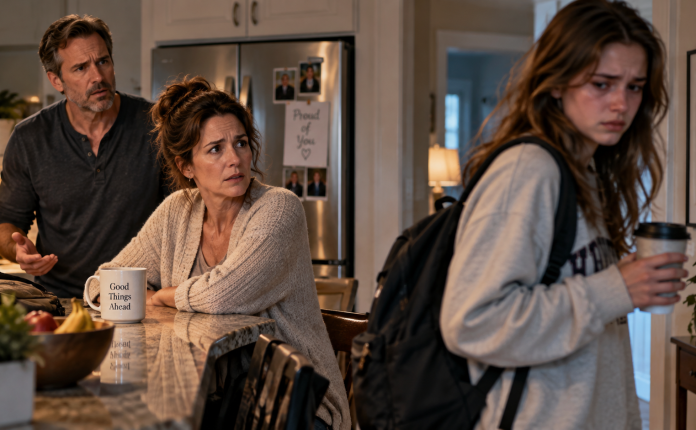
Julian returned from Maui three days later, tan and relaxed, walking through the front door with his suitcase still smelling faintly of sunscreen, completely unaware that his mother had already been buried the previous morning in a small, quiet ceremony attended by exactly the people who had actually shown up for her over the years: two of her old nursing aides, her longtime neighbor, and me. He hadn’t called back once since that final voicemail, apparently assuming his silence would simply be forgiven the way it always had been before.
“Where’s Mom?” he asked, setting his bag down by the door, still oblivious. “She wasn’t answering her phone yesterday either. Is she still at the hospital?”
I looked at him for a long moment before answering. “Your mother died four days ago, Julian. While I called you thirty-one times. While your girlfriend answered your phone from a beach in Maui and laughed at me.”
His face went through several expressions in quick succession, confusion, disbelief, and finally something that looked almost like genuine grief, though it arrived far too late to mean anything to either of us. “Margaret, I can explain the trip. It wasn’t what it sounded like.”
“I don’t need you to explain,” I said. “I need you to sit down, because there are some things you need to understand about what your mother left behind before this conversation goes any further.”
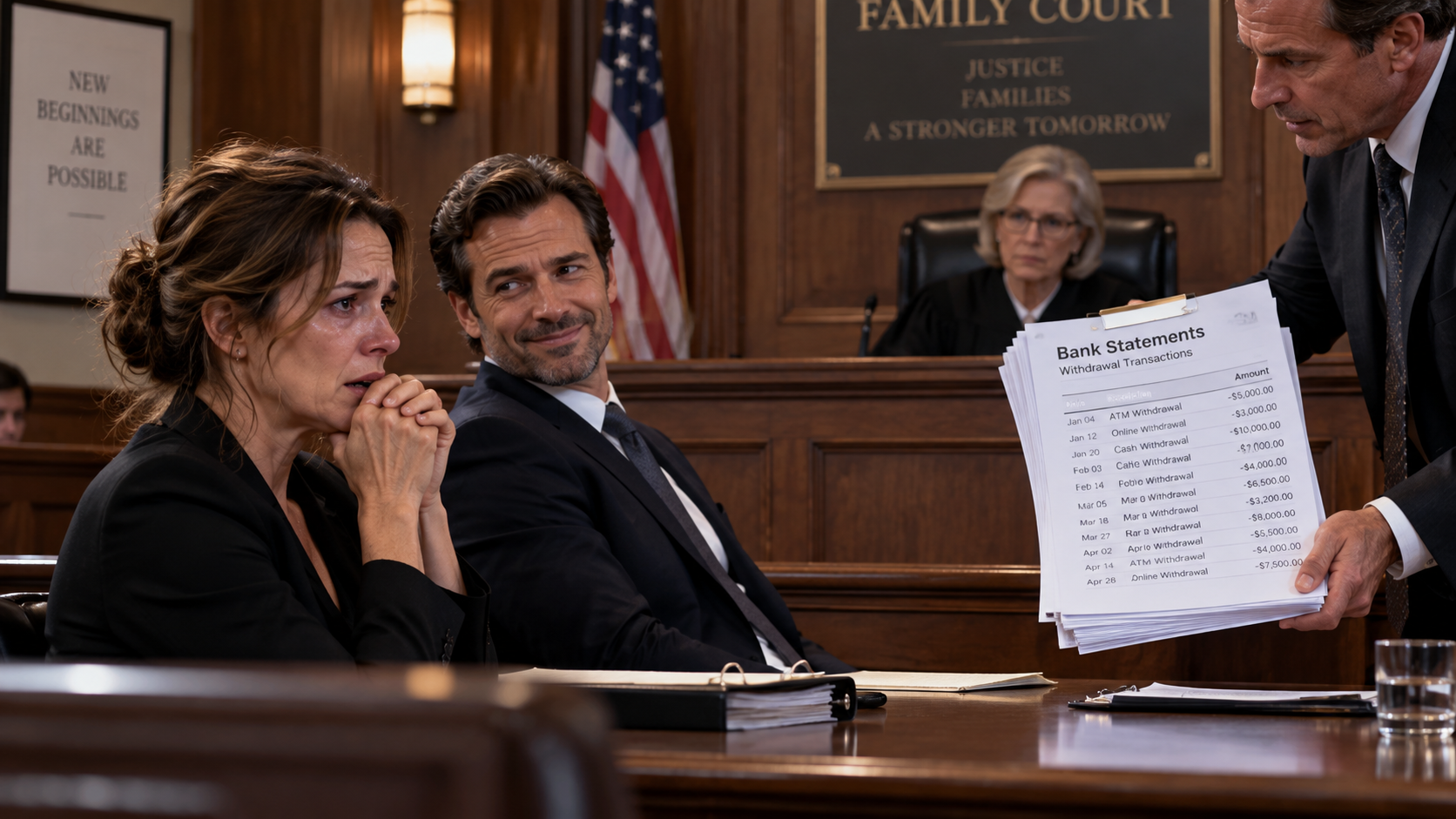
I laid the folder from the safety deposit box across our kitchen table, the same table where he’d once promised me, years earlier, that we’d grow old together taking care of each other’s parents. He flipped through the documents with increasing panic, his hands shaking as he reached the bank statements showing the transfers he’d made from Eleanor’s accounts over the previous two years.
“This isn’t what it looks like,” he said, his voice climbing. “I was managing her money because she couldn’t anymore. That’s completely normal for a son to do.”
“Eleanor didn’t think so,” I said, sliding Priscilla’s business card across the table. “She was in the process of changing her will when she died. She’d already given a sworn statement to her attorney about exactly how you’d been managing her finances. And she’d already started transferring the lake house situation into a formal legal complaint before her stroke made it impossible to finish.”
Priscilla met with both of us the following week, walking Julian through exactly what Eleanor had documented and precisely how thoroughly she had prepared for this moment, even if she hadn’t lived to see it fully play out. “Your mother’s draft will was never formally executed before her death,” Priscilla explained carefully, “which means the estate technically falls under her previous will, naming you as primary beneficiary. However, the financial documentation she gathered regarding the account transfers and the property deed raises serious questions about elder financial exploitation, questions I’m obligated to report given what’s in this file.”
Julian’s face went pale. “You’re going to report me? To who?”
“Adult Protective Services opened an investigation the moment I filed the required disclosure,” Priscilla said evenly. “Given the scale of the transfers, over one hundred and forty thousand dollars across eighteen months, along with the property transfer executed while your mother’s cognitive capacity was already documented as declining following her first stroke, this isn’t simply a family dispute anymore. This is a matter for the district attorney’s elder abuse unit to evaluate.”
The investigation moved slowly but thoroughly over the following months. Detective Carla Whitfield, assigned to the elder financial exploitation unit, interviewed Eleanor’s former physicians, who confirmed that her cognitive decline had been documented as early as fourteen months before the lake house transfer, well before Julian’s claim that she had “willingly and clearly” agreed to sign it over. Bank records showed a pattern of withdrawals that consistently spiked in the days immediately following Julian’s visits, a detail the detective found particularly damning once laid out chronologically.
I filed for divorce the same week Priscilla’s investigation formally began, unable to reconcile the man sitting across from me, panicking about his mother’s financial paper trail, with any version of the husband I’d once believed I married. Julian didn’t contest it, focused entirely on the mounting legal pressure from the elder abuse investigation, though his attorney did attempt, briefly, to argue that our joint assets shouldn’t be affected by allegations unrelated to our own marriage.
That argument fell apart quickly once Detective Whitfield’s investigation revealed that some of the transferred funds from Eleanor’s accounts had gone directly into a joint account Julian shared with his mistress, a woman named Vanessa Cole, the same voice I’d heard laughing over the phone from Maui. Vanessa had apparently known exactly where the money was coming from, and text messages recovered during the investigation showed her explicitly encouraging Julian to “speed up” the lake house transfer before his mother’s health declined too far for the paperwork to hold up legally.
Julian was charged with financial exploitation of an elder adult, a felony given the amount involved, along with a separate charge for fraudulent transfer of property. Vanessa was charged as an accessory, given the clear evidence of her knowledge and encouragement throughout the scheme. Neither of their attorneys pushed for trial once the full documentation, Eleanor’s sworn statement, the medical records establishing her cognitive decline, and the financial trail, made the case for the prosecution almost airtight.
Julian pleaded guilty to financial exploitation, receiving five years of probation, mandatory restitution of the full amount taken from his mother’s accounts, and an order to return the lake house to Eleanor’s estate, which under the circumstances of the voided draft will, I inherited as her documented sole caregiver once Priscilla successfully argued for the draft will’s intent to be honored through a separate probate proceeding given the clear evidence of Eleanor’s wishes. Vanessa received two years of probation and a smaller restitution order tied to her role as an accessory.
“I never meant for it to go this far,” Julian told me during our final meeting to finalize the divorce paperwork, sitting across from me in Priscilla’s conference room. “I told myself I was just helping manage things. I don’t think I ever let myself really look at what it actually was.”
“Your mother looked at it clearly enough for both of you,” I said. “She spent the last two years of her life quietly building a case against her own son because she loved you enough to hope you’d change, and honest enough to protect herself and me when you didn’t.”
I moved into Eleanor’s lake house that spring, once the property transfer back to her estate was finalized, choosing to keep it rather than sell it, partly because I’d spent so many peaceful afternoons there with her during her better years, and partly because it felt like the right way to honor exactly what she’d fought to preserve in her final months. I used a portion of the restitution and the small trust she’d managed to establish before her death to fund the caregiver scholarship she’d mentioned in her letter, naming it the Eleanor Whitfield Caregivers Fund, awarding its first grant that autumn to a young nursing student who reminded me, in her quiet dedication, of the person I’d been twenty years earlier when I first started caring for Eleanor myself.
I started seeing a grief counselor that summer, someone who specialized in complicated grief, the kind that arrives tangled up with betrayal rather than simple loss. “You’re mourning two things at once,” Dr. Alvarez told me during one of our early sessions. “The mother-in-law who became more like your own mother than your husband ever became a real partner, and the marriage you believed you had before that phone call revealed exactly what it actually was. Both griefs deserve their own space, even though they arrived on the same terrible night.”
That distinction helped more than I expected. I grieved Eleanor purely, missing her stubborn humor, her insistence on doing her own hair even after the stroke made it difficult, the quiet gratitude she’d shown me every single day I sat with her, understanding fully what I was choosing to give up by staying so devoted to her care. I grieved Julian differently, more slowly, recognizing gradually that the version of him I’d loved for over two decades had perhaps never fully existed in the way I needed him to.
One year after that hospital room, I sat on the porch of Eleanor’s lake house, now truly mine, watching the water catch the late afternoon light the way it had during so many visits with her over the years. The caregiver scholarship had grown to fund three students that year instead of one, thanks to a modest fundraiser I organized with two of Eleanor’s old nursing aides, women who had become genuine friends through the process of honoring her memory properly.
I still keep that small silver key in a drawer beside my bed, though I’ve never needed to use it again since that first visit to the bank. I don’t need to. I carry what it revealed with me every single day, in the quiet, steady life I’ve built on the foundation of a woman who, even in her final failing moments, found the strength to make sure the truth outlived every lie her son had ever told.