My name is Janet. I am sixty-six years old. Last month, I had knee replacement surgery. Routine, the doctor said — they always say routine, as if any surgery at sixty-six is routine, as if being cut open and put back together is something you do on a Tuesday. I’d be in the hospital three days.
Before I went in, my daughter Amy said: “Mom, give me your debit card. I’ll get your groceries, pay your bills while you’re out. You don’t want to be worrying about the electric bill on painkillers.”
It seemed reasonable. It seemed loving. I’d be groggy, she’d be helping. That’s what daughters do. That’s what I had raised her to do.
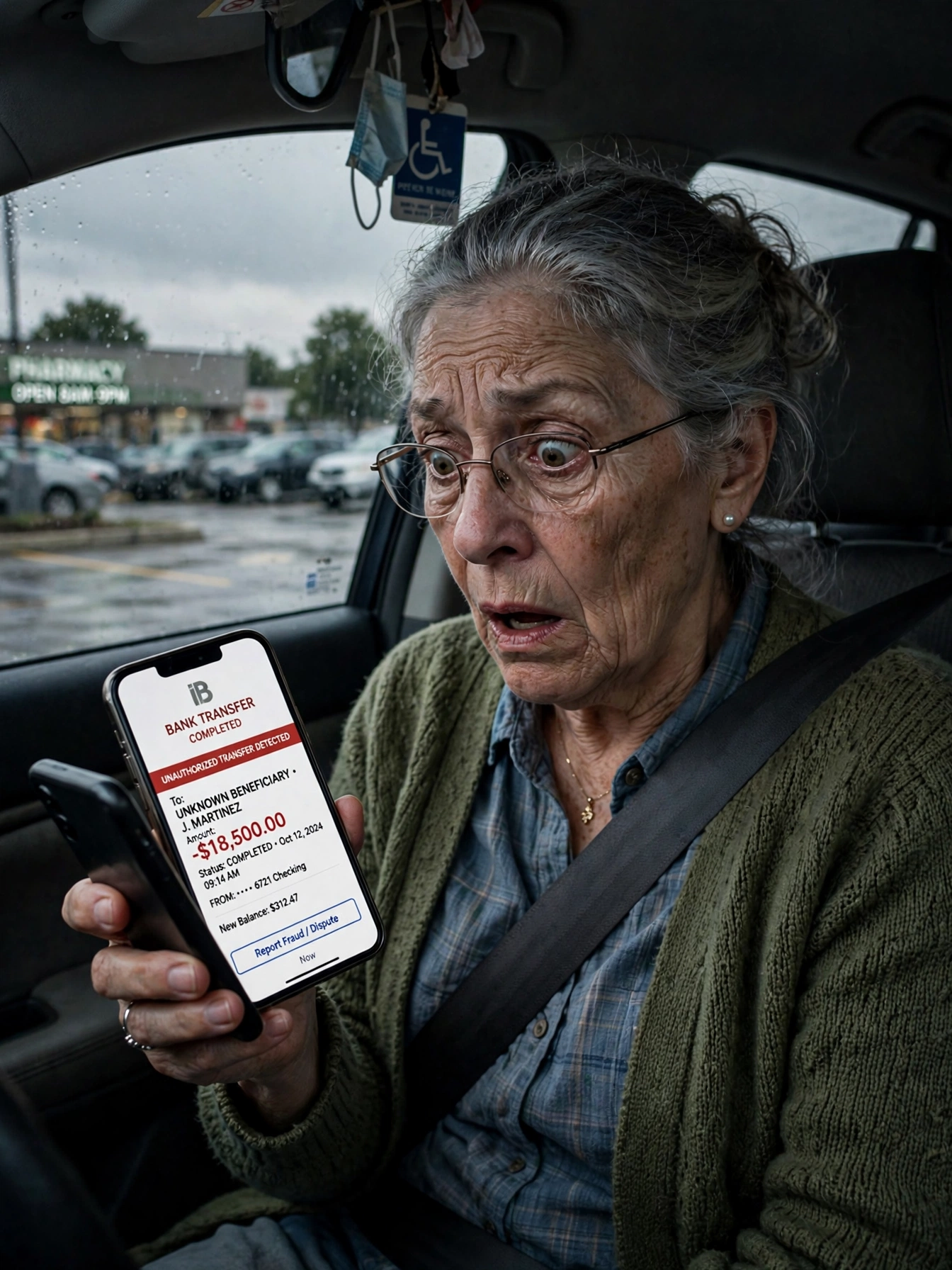
The surgery went well. On day three, groggy but happy, the new knee aching in a way the nurse said was normal and good, I checked my bank app on my phone — just to make sure the electric bill had been paid. A small, responsible impulse.
Balance: $47.12.
I stared at the number. I refreshed the app, thinking it was a glitch, thinking the hospital Wi-Fi was playing tricks. $47.12.
My savings — thirty-eight thousand dollars, saved over fifteen years, a little at a time, for a new roof and for emergencies — was gone. Every penny. The account was empty the way a house is empty after the movers leave.
I called the bank with hands that shook so badly I could barely hold the phone. “There must be a mistake—”
“No mistake, Mrs. Thompson.” The representative was kind, which somehow made it worse. “There were twelve transfers over three days, all to an account in your daughter’s name. All authorized with your debit card and PIN.”
Twelve transfers. Three days. While I was under anesthesia. While I was in a hospital bed with a bandaged knee, my daughter had been systematically emptying my life savings.
I called Amy. She didn’t pick up. I called again. Voicemail. Then a text appeared: “Mom, I can explain. Come home and we’ll talk.”
I was discharged the next day. My son’s friend drove me home — I was still on crutches, still bandaged, still moving like a woman made of glass. My front door was unlocked. Inside, there were suitcases in the hallway. Amy was packing — her clothes, her things, folding them with the quick, jerky movements of someone who wants to be gone.
“Amy,” I said, leaning on my crutches in my own doorway. “Where’s my money?”
She didn’t look at me. “Mom, I needed it. Jason left me. I was going to lose the apartment. I have the kids—”
“You stole thirty-eight thousand dollars from your mother while she was in surgery!”
“I was going to pay it back!” She was crying now, mascara running. “I just needed—”
“Twelve transfers, Amy. In three days. That’s not ‘needing.’ That’s planning. You planned this.”
My grandchildren — seven and five — were on the couch, watching. They didn’t understand. They just knew Grandma was crying and Mommy was crying, and the apartment felt wrong.
“Amy,” I said quietly, “give it back. Today. Every dollar.”
She laughed. It was a bitter, broken sound. “It’s gone, Mom. Rent. Credit cards. Jason’s truck payment — he said he’d come back if I paid it—”
Jason. Her ex. The man who had already left her. She had given my fifteen years of savings — my roof, my emergencies, my security — to a man who had already walked out the door.
I looked at my grandchildren — innocent, scared, clutching each other on the couch — and I made the hardest call of my life. I called the police.
Amy stared at me, the phone to my ear. “You’re calling the cops? On your own daughter?”
“You stole from me while I was unconscious, Amy.” My voice didn’t shake. I don’t know where the steadiness came from. “What did you expect?”
The police came. They were professional, gentle with the children. They took a report, photographed the bank statements I’d printed at the hospital. Amy was charged with elder financial exploitation — a felony in our state. The officer told me, quietly, that they see this more than people think. That didn’t make me feel better. It made me feel worse, for all of us.
But the money was gone. Spent. The roof still leaked — I could hear it when it rained, a steady drip in the back bedroom I’d been meaning to fix. And I needed physical therapy I now couldn’t afford, the kind that determines whether a new knee becomes a working knee or just an expensive ache.
That’s when my son called. David lives three states away — the child who left, the one I worried about. He said: “Mom, I’m flying in tomorrow. And I’m bringing someone.”
He arrived with a woman named Carla — a victim advocate from an elder abuse nonprofit. She was in her forties, calm, with the air of someone who had sat in a hundred living rooms like mine. “Mom,” David said, “you’re not the first. And there are resources. You don’t have to do this alone.”
Carla helped me file for victim restitution — the court could order Amy to repay, garnishing her wages until the debt was satisfied. She connected me with a legal aid attorney who didn’t charge me a dime. She found a program that covered my physical therapy, the full course, no copay.
“Amy’s facing real charges,” Carla said, sitting at my kitchen table. “But Janet — the goal isn’t to destroy your daughter. It’s to protect you and get you whole. Those are different things.”
Amy took a plea deal: probation, mandatory financial counseling, and restitution — five hundred dollars a month until the thirty-eight thousand is repaid. It will take six years. Six years of monthly reminders.
She’s living with a friend now. The children are with Jason’s mother temporarily — which breaks my heart every single day, but Amy needs to get stable, and the kids need steadiness more than they need their mother right now.
Do I forgive her? I’m working on it. She’s my daughter — the baby I nursed, the girl I taught to ride a bike. But forgiveness doesn’t mean forgetting, and it doesn’t mean access. I changed all my accounts, all my PINs, all my passwords. Amy will never have financial access to my life again. That boundary is not punishment. It’s architecture.
David stayed for two weeks. He fixed the roof himself — up there with his buddies on a Saturday, hammering in the heat, the way men in our family have always shown love. He set up my banking with alerts for every single transaction, no matter how small. He made me promise: “Mom, never give anyone your PIN. Not me. Not anyone. Not ever.”
The knee healed. The money is coming back, five hundred dollars at a time — I get the deposit notification and I feel something complicated, grief and relief braided together. Amy calls every Sunday. Our conversations are careful, polite — not warm yet. Maybe someday. Maybe not. I’m learning to live with “maybe.”
But here’s what I want every woman reading this to know, the thing I wish someone had told me in that hospital bed: I was ashamed. I didn’t want to call the police on my own child. I lay there thinking, “What will people think? What kind of mother reports her daughter?”
Carla said something I will never forget, something I repeat to myself on the hard days: “The shame isn’t yours, Janet. You didn’t steal. You trusted. There’s a difference. Never confuse the two.”
If someone you love steals from you — even family, especially family — report it. Love doesn’t mean letting them get away with it. Sometimes the most loving thing you can do is let them face the consequences, because consequences are the only thing that ever taught any of us anything.
My savings are rebuilding. My knee is strong — I walked a mile last week, the whole mile, without stopping. And my PIN? It’s mine alone. It lives in my head and nowhere else.
Nobody — nobody — gets my debit card again.