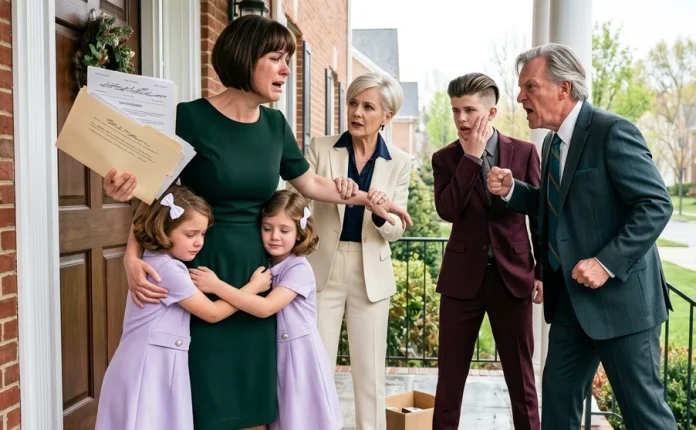
“If you marry that woman with Down syndrome, you’re out of my will.”
My mother said it plain as day.
No hesitation. No softness. No shame.
I was twenty-five when I met Hannah. It was a small café near my workshop, the kind of place where the chairs never matched and the coffee was always slightly too hot. She was sitting by the window with a book in her hand and a cup of chamomile tea in front of her, reading like the whole room belonged to silence.
On our first date, she looked at me and said, very calmly, “I have Down syndrome. I live with my parents. I just wanted you to know that up front. No surprises.”
I remember staring at her for a second, not because I was shocked, but because of the honesty in the way she said it. No apology. No performance. Just the truth, offered with dignity. I didn’t say much after that. I just remember thinking: whoever raised this woman did something right.
Hannah had this way of making the world feel less crowded. She noticed things other people hurried past. A cracked flowerpot outside the bakery. A little girl laughing at pigeons in the square. The way the waitress at the café always tucked one curl behind her ear when she was nervous. Being around her made me pay attention in a way I never had before.
When I told my family about her, my mother reacted like I had announced a disaster.
She said I was ruining my future.
She said people would talk.
She said I was being reckless, immature, stubborn.
Then came the line I never forgot.
“If you marry that woman with Down syndrome, you’re out of my will.”
My father said nothing at first. He just looked down at his plate and kept eating like silence could save him from choosing a side. My sister tried to act concerned, but her concern had the same shape as judgment. A few of my friends did not even bother pretending. They stopped calling slowly, then all at once. Invitations dried up. Messages got shorter. People who used to clap me on the shoulder and ask how life was going suddenly had somewhere else to be.
Hannah never asked me to fight them.
That was one of the things I loved most about her.
She never tried to turn my family into her battle. She never demanded speeches or loyalty tests. She just kept showing up. Meeting me after work. Ordering the same tea. Laughing when I got sawdust on my shirt. Listening when I talked. Really listening, in a way most people don’t.
Coffee became dinners.
Dinners became Sunday mornings.
Sunday mornings became a life.
A year later, I proposed in the same church where I was baptized. Nothing dramatic. No orchestra. No big crowd. Just the twelve people who had not disappeared when things got uncomfortable, and Hannah standing in a soft blue dress with tears in her eyes before I even got all the words out.
She said yes before I finished the question.
We got married that same year.
My mother did not come.
She did not come to the wedding. She did not send a card. She did not call afterward. What hurt was not only that she disapproved. It was the coldness of how absolute she made it. As if love could be revoked by principle. As if my happiness had become a form of disobedience she needed to punish.
The first few years were not perfect, but they were real. We learned each other in the ordinary ways real marriages do. Hannah liked the house quiet in the mornings. I liked the radio on while I worked. She folded towels with ridiculous precision. I left cabinet doors half open without realizing it. She cried at nature documentaries. I pretended not to. We argued about groceries and budgets and whether plants counted as decoration or responsibility.
In other words, we built a marriage.
Not an inspirational story.
Not a lesson.
A marriage.
Then Caleb was born.
The first time I saw Hannah holding him, I felt something in me go still. Not because it was surprising. Because it was so completely right. She looked down at him with that same steady tenderness she had always moved through the world with, and I thought about all the people who had warned me. All the people who had acted like love with her would be a burden, a mistake, a compromise.
They had been wrong in ways they could never understand.
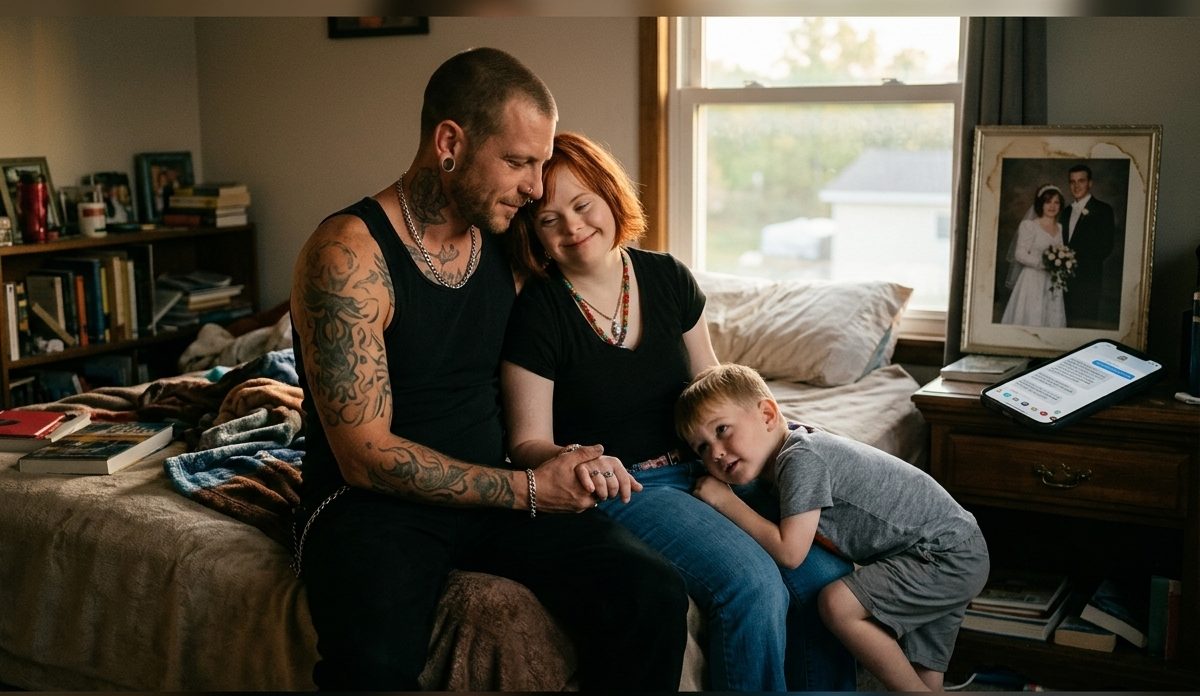
Caleb is ten now. Every morning he comes charging into our room before either of us is ready to be awake. Every night Hannah falls asleep holding my hand, even if we started the evening pretending we were both too tired to talk. Our kitchen is loud. Our laundry is never done. Our fridge is covered in spelling-test stickers and crooked drawings and one terrible family photo Caleb insists is the best one because we all look “real.”
That is our family.
The one they said would not last.
Last month, I ran into an old friend at the hardware store. He was one of the ones who had stopped calling back then. We made awkward small talk near the paint aisle, and at some point he asked if I had kids. I pulled out my phone and showed him a photo of Hannah and Caleb at the park, both of them grinning into the sunlight like they had never met a reason not to.
He stared at the picture for a second and said, quietly, “You look really happy, man.”
I looked at the photo again.
“I am,” I said.
And that was enough.
My mother never changed her mind. She has missed the wedding. She has missed every birthday Caleb has had. She has missed Christmas mornings, school concerts, scraped knees, family dinners, and all the tiny ordinary moments that actually make up a life. At some point, I stopped hoping she would wake up and realize what she was throwing away. People can waste years waiting for a parent to become who they needed them to be. I did that long enough.
Now I just live my life.
I do not tell this story for sympathy.
I tell it because somewhere out there, somebody is standing where I once stood. Somebody is being told that love has conditions. That family gets a vote on who is worthy of standing beside them. That appearances matter more than devotion. That public comfort matters more than private truth.
They don’t.
The people who warned me thought they were protecting me from a smaller life.
What they were really doing was revealing the limits of their own hearts.
Because the truth is, loving Hannah never made my life smaller. It made it clearer. Kinder. More honest. She did not ask me to save her. She did not need rescuing. She simply loved me with a steadiness most people spend their lives begging for, and I was lucky enough to recognize it when it arrived.
So if someone is telling you that the world gets to decide what your love is worth, let me save you a little time.
It doesn’t.
Love is not made legitimate by approval.
And the people who walk away because your happiness offends their prejudice were never standing beside you as fully as you believed.
I lost an inheritance.
I lost a few friendships.
I lost the version of my family that only worked if I obeyed it.
But I gained a wife who still reaches for my hand in her sleep, a son who laughs like mornings are always worth waking up for, and a home built on something stronger than permission.
If you ask me, that was never a loss at all.