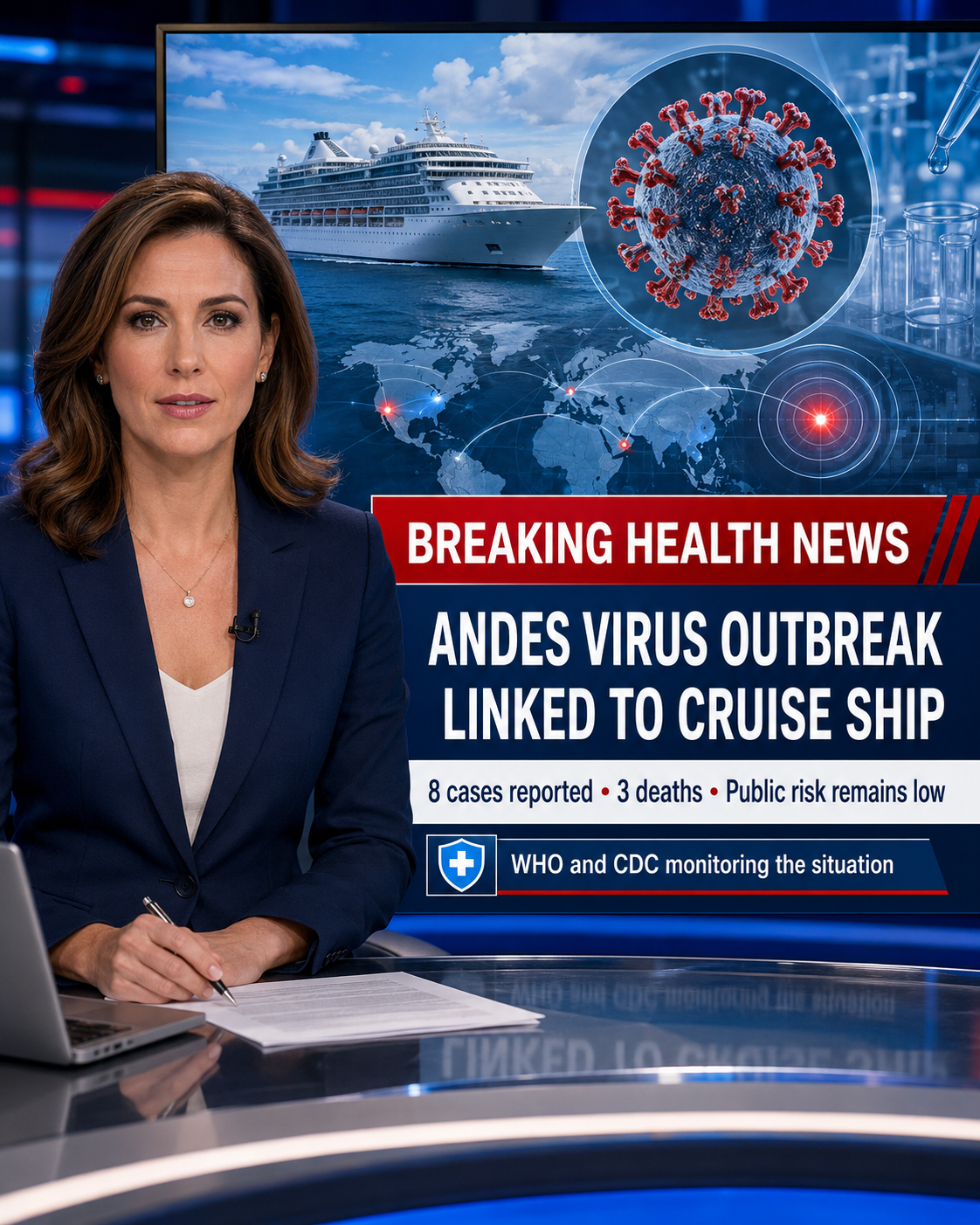
Health officials are closely monitoring a deadly virus outbreak linked to the MV Hondius cruise ship, after a cluster of passengers developed severe respiratory illness while traveling across the Atlantic.
According to the World Health Organization, the outbreak involves Andes virus, a type of hantavirus known to cause a serious lung disease called hantavirus pulmonary syndrome. WHO says the cluster was first reported on May 2, 2026, after passengers aboard the Dutch-flagged cruise ship became seriously ill. (World Health Organization)
As of the latest update, eight cases have been reported, including three deaths. WHO says six cases have been laboratory-confirmed as hantavirus infections, and all confirmed cases have been identified as Andes virus. (World Health Organization)
The cruise ship, MV Hondius, had been traveling from Argentina toward Cabo Verde, with passengers and crew on board when the outbreak was identified. Public health teams are now working across several countries to trace contacts, monitor exposed passengers, and prevent further spread. (World Health Organization)
Andes virus is not usually spread like the flu or COVID-19. Hantaviruses are most commonly linked to infected rodents, and people can become infected after contact with rodent urine, droppings, saliva, or contaminated dust. However, Andes virus is unusual because it is the only hantavirus species known to allow limited human-to-human transmission, mainly after close and prolonged contact. (CDC)
Health experts are urging the public not to panic. WHO says the situation is serious, but the current risk to the global population remains low. The CDC also says the risk to the American public is extremely low, while officials continue to monitor passengers and coordinate medical support. (World Health Organization)
The CDC says it has deployed medical and epidemiology teams to support the response, including assessments for American passengers connected to the ship. U.S. officials are also preparing medical repatriation and quarantine support for affected travelers. (CDC)
Symptoms of hantavirus infection can begin with fever, muscle aches, tiredness, headache, nausea, or stomach problems. In severe cases, the illness can progress quickly to coughing, breathing difficulty, pneumonia, and respiratory failure. WHO reported that illness onset among affected passengers occurred between April 6 and April 28, 2026. (World Health Organization)
Officials say more cases may still be reported because hantavirus symptoms can take time to appear after exposure. For that reason, passengers, crew members, and close contacts are being monitored carefully. (World Health Organization)
At this stage, there is no evidence of a wider public outbreak, and health agencies are emphasizing that this is not another COVID-style pandemic. WHO Director-General Dr. Tedros Adhanom Ghebreyesus told people in Tenerife that the virus is serious, but the risk to daily public life remains low. (World Health Organization)
For now, international health authorities say the priority is clear: identify exposed passengers, provide medical care, trace contacts, and continue monitoring the situation until the outbreak is fully contained.