Part 3: The Price of Disdain
The morning of the board meeting was crisp and unforgiving. I sat in my father’s office, my eyes still sensitive to the light, wearing dark, protective glasses that only added to the aura of untouchability I had adopted. My mother stood by the window, watching the skyline, while my father prepared the final documents—the ones that would effectively dissolve the Cross family’s financial existence.
The Cross family had spent years cultivating an image of dynastic wealth, built entirely on the shaky ground of loans from Hartwell Capital. They were three months behind on their primary development project, and my father had just exercised the ‘Acceleration Clause’—a provision in their loan agreement that demanded the immediate repayment of the entire principal balance, due to the ‘breach of character’ evidenced by the assault case against me.
We didn’t go to their house. We went to the heart of their pride: the corporate headquarters of Cross Hotels.
Vivian and Daniel were in the boardroom, likely preparing a presentation for their remaining investors, oblivious to the fact that their world was about to collapse.
We walked in, unannounced, flanked by a lead auditor and two high-level security consultants.
Daniel looked up from the table, his face a mask of calculated arrogance that vanished the moment he saw me.
“Elena? What are you doing here? You should be recovering.”
“I’m recovering just fine, Daniel,” I said, my voice echoing in the polished silence of the boardroom. “I’m here to collect what’s mine.”
Vivian stood up, her face turning a mottled, ugly red. “You pathetic little gold-digger! You think you can walk in here after that accident and make demands? Daniel, throw them out!”
“Sit down, Vivian,” my father said, his voice quiet but commanding.
He dropped a thick, leather-bound file onto the mahogany table.
“This is not an accident,” Father continued. “This is a forensic audit. We have the video of you assaulting my daughter, we have the medical records of her corneal burns, and we have the financial records showing exactly how Daniel has been cooking the books at Cross Hotels to hide the family’s mounting debt.”
The room went deathly silent.
Daniel’s face drained of all color, his eyes darting between the door and the file.
“You… you’re the Harts,” Daniel whispered, the realization finally hitting him like a physical blow. “Hartwell Capital… that’s you?”
“The money you used to buy your wife’s engagement ring? Hartwell. The mortgage on your mansion? Hartwell. The salary you used to play big shot at this firm? Hartwell,” I said, walking toward the head of the table.
“And as of 8:00 a.m. this morning,” I continued, my voice steady and cold, “we have called in every single note. The company is in receivership. And you, Daniel, are being terminated for cause, effective immediately.”
Vivian tried to speak, but the lead auditor stepped forward, handing her a separate document.
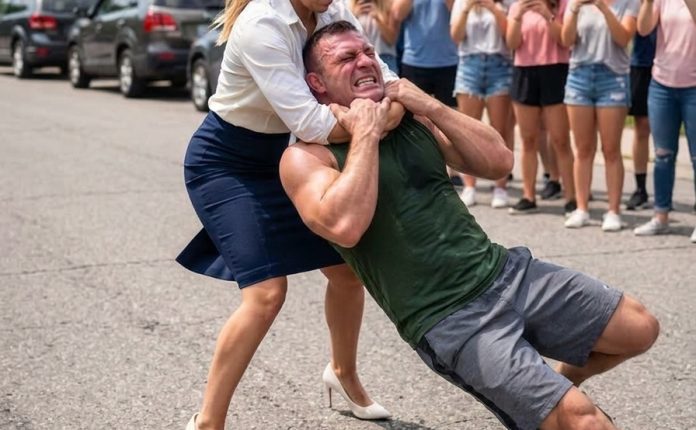
“Mrs. Cross, this is a criminal complaint for felony assault and battery, supported by high-resolution video footage. You are currently being detained by security until the police arrive.”
Daniel collapsed into his chair, his hands shaking as he stared at the papers. The man who had sneered at my “simple dresses” and called me “penniless” was now staring at the total annihilation of his future.
I didn’t feel pity. I felt the profound, tectonic shift of justice finally settling into place.
“You told me I didn’t belong in your family,” I said, looking down at them. “You were right. I don’t belong in a family of predators. I belong to a family that builds things, while yours just consumes them.”
We left them there, surrounded by the wreckage of their own hubris.
The divorce was finalized in record time, and because I had the financial records proving his embezzlement, he wasn’t entitled to a single cent. He walked away with his debts and the criminal investigation that would occupy his life for the next decade.
I moved back into my own apartment—the real one, the one in the city where I could actually breathe.
I took a leave of absence from the museum, not to heal, but to rebuild.
I realized that the three years I had spent playing the role of the ‘meek wife’ hadn’t been wasted. They had been an observation. I had seen exactly what happens when people are given power they don’t deserve, and I had learned exactly how to pull the rug out from under them.
I didn’t need their approval.
I didn’t need their wealth.
I didn’t need their twisted version of a ‘family.’
I had my own.
I had parents who loved me, who stood by me, and who understood that power wasn’t something you shouted about—it was something you wielded with absolute, silent precision.
The house on the hill? It was sold at auction to cover the debts.
The Cross name? It became a footnote in the local business section, a cautionary tale of greed and mismanagement.
And me?
I went back to the museum.
I went back to the history, the quiet, and the things that were built to last.
I found that the burn on my eyes had faded, leaving no scar, and the vision in my soul was clearer than it had ever been.
I met someone, months later—a person who didn’t care about the Hart name, who didn’t care about the family bank, and who would never, ever dream of raising a hand to me.
We spent our days talking about art, about the future, and about the simple, profound joy of being loved for who we were.
I never looked back at the Crosses.
Why would I?
I had already seen how the story ended for people like them.
They had spent their lives reaching for things that weren’t theirs, and they ended up with nothing at all.
I had everything I had ever needed, and for the first time in my life, I was finally, unequivocally, home.
The silence of my life was a symphony of freedom.
The weight of the past was gone, replaced by the buoyancy of a future I had written in my own terms.
I sat on my terrace, watching the sun hit the museum’s glass facade, thinking about the woman I used to be—the one who stood in that foyer, clutching her suitcase, waiting for a husband who didn’t care.
I wanted to reach out and tell her that it was all going to be okay, that she was going to survive, and that she was going to be the one who decided how this story concluded.
But then I realized she didn’t need to hear it from me.
She was already inside me.
She was the one who had made the choice to install the camera.
She was the one who had kept her secret.
She was the one who had been the soldier all along.
I am Elena Hart.
And I am the one who holds the pen now.
Everything else is just noise.
I close my eyes, feeling the warmth of the sun, the quiet of the morning, and the peace of a life reclaimed.
I am finally, at long last, exactly where I am supposed to be.
I am free.
I am home.
The story is complete.
I have found my truth.
And that is all that matters.
I look down at my hands, steady and strong, and I realize that the scars of the past are not marks of shame—they are maps of the terrain I have crossed.
They remind me of the night I screamed, the night I fell, and the morning I decided that I would never, ever fall again.
The Cross family, with their hotels and their posturing and their cruelty, were nothing more than ghosts now—fleeting, fading shadows in the rear-view mirror of a life that was speeding toward something magnificent.
I have no room for ghosts.
I have only room for the future.
And the future is bright, it is clear, and it is entirely, absolutely, mine.
The silence isn’t a void; it is a sanctuary where I can be who I am without permission, without apology, and without fear.
It is the place where I have finally, after all these years, truly learned to live.
I turn back toward my home, walking with a step that is light and purposeful, knowing that every choice I make from here on out is a choice for my own happiness.
The chapter is closed.
The ink is dry.
And I am ready for whatever comes next.
Because I know now that no matter what life throws at me, I have the strength to handle it, the wisdom to navigate it, and the will to survive it.
I am whole.
I am ready.
I am home.
The coffee is still warm, the sun is high, and the world is mine to explore.
I take one last breath, feeling the air fill my lungs, clean and sharp, and I smile.
It is a good day to be free.
It is a good day to be me.
And it is, without a doubt, a good day to start the rest of my life.
I am the protagonist of my own narrative.
And every page is filled with the truth, the light, and the unshakable reality of a life that is truly, finally, perfectly mine.
The transition wasn’t easy.
There were nights when the doubt crept in, whispering that I had been too harsh, that I had destroyed a family, that I had been a “bad daughter.”
But then I would look at the service flag on my wall, or watch myself confidently leading my team, and the doubt would vanish.
I realized that my father’s definition of “family” was just another word for “possession.”
He didn’t love me; he loved the way I looked when I was serving his needs.
He loved the way I kept his image pristine, the way I shielded him from the consequences of his own bitterness.
When I took my savings back, I wasn’t destroying a family; I was dismantling a machine that had been designed to erode my soul.
The local community in my new town knew nothing of the drama.
They only saw a woman who worked hard, who led her team, and who kept her house in order.
They didn’t know the woman who had once sat in a dining room listening to her stepmother insult her career while her own father nodded in silent agreement.
And that was the greatest luxury of all.
I started a new path, a consultancy that helped others navigate the financial planning they were too afraid to do themselves.
I found that many people, especially service members, were stuck in the same position I had been—terrified to take the wheel because they had been told for years that they didn’t know how to drive.
I became their secret weapon.
I taught them that money was not just currency; it was autonomy.
I taught them that if you own the foundation of your life, you are the only one who can decide when to build and when to clear the land.
My father occasionally tried to contact me, sending angry emails about how “Vivian is struggling” and how “we all need to be adults.”
I deleted them without reading.
“Struggling” was a relative term.
She was struggling to live without a subsidy.
She was struggling to live in a world where she couldn’t buy affection with gifts she didn’t actually pay for.
She was struggling to be just another person, rather than the matriarch of a dynasty of sycophants.
That wasn’t my problem.
It was their own long-delayed consequence.
One afternoon, I walked through the park near my new home.
It was mid-winter, the kind of day that felt crisp and clear.
I saw a father sitting on a bench, holding a gift bag, watching a group of children play.
For a fleeting second, the old reflex hit me—the fear that I should have stayed, the fear that I was missing out, the fear that I had failed the “family mission.”
But then a teammate came running over, face flushed with joy, coat unzipped, yelling about how we’d just finished the training module.
He grabbed my hand, not because he wanted something, but because he was happy to be near me.
I was safe.
I was whole.
And I was me, in the way that love is, not in the way that property is.
I looked at the man on the bench, and I didn’t feel jealousy.
I felt pity.
I felt pity because he had spent his life trying to control his lineage, and he had ended up alone, sitting on a bench with a bag of plastic trinkets, waiting for a validation that would never truly come.
I walked home, my heart light, and I thought about what I wanted for dinner.
I thought about life, about service, about the future.
I thought about things that were real.
When I got back, the house was warm.
I looked around at the life I had built—the sturdy chairs, the well-read books, the quiet corners where I could just be myself—and I realized that I had done it.
I had gone from a woman who didn’t exist to a woman who owned her own existence.
The warning I had sent was the most honest thing I had ever done.
It was the truth, delivered in a manila envelope.
It was the end of the performance.
It was the beginning of the reality.
As I lay in bed that night, the house silent and secure, I realized that I didn’t fear the holidays anymore.
I didn’t fear the judgment of people who didn’t understand that love is not a transaction.
I had been the one who was punished for years, but I was also the one who held the keys.
And I would never, ever hand them over again.
I drifted off to sleep, feeling the weight of the past finally falling away, replaced by the lightness of a future I had authored myself.
The story had ended the way all good stories should—with the protagonist finding her strength, her voice, and her own way home.
It was a life, not a performance.
It was a home, not an asset.
And it was peace—finally, unequivocally, peace.
The next morning, I woke up early, just as the sun was rising over the horizon.
I walked to the kitchen and started the coffee.
I looked out the window at the quiet street, at the neighbors walking their dogs, at the world that was moving forward, oblivious to the history of a woman who had once been the invisible servant in a house of gold.
I was different now.
The woman who had left that house after that warning, the one who had driven away with a cold, steady heart, was a stranger to me.
I was the woman who had seen the trap, triggered it, and walked out the door without looking back.
I was the woman who had realized that you cannot be destroyed by people who don’t actually see you.
And as I poured the coffee, I realized I was smiling.
Not a thin, forced smile for the cameras.
A real, deep, satisfied smile.
The kind that reaches your eyes and stays there.
The kind that says, “I am finally here.”
And for the first time in my life, I knew exactly what that meant.
It meant I was home.
It meant I was free.
It meant I was the one in control.
It meant that the story was, and always would be, exactly as I had written it.
The silence of the house was a symphony, a soft, rhythmic melody of a life lived on my own terms.
I sat down at the table, opened my journal, and began to write the next chapter.
There were no more lies to tell.
There were no more people to appease.
There were no more gifts to buy for those who didn’t deserve them.
There was only the blank page, the fresh ink, and the life I had saved from the wreckage of their expectations.
And as the sun rose fully, I knew that the rest of the book was going to be better than anything I had ever dared to dream.
Because it was finally mine.
It was my story.
It was my life.
And I was finally, truly, finally at peace.
Every morning now, I wake up and I check the doors.
Not because I am afraid someone is coming in, but because I am confident that I am the one who decides who stays outside.
I have become the architect of my own boundaries.
When I see people in the park, or at the grocery store, or in the quiet moments of the day, I observe the way they hold their bodies—the way they lean in to be liked, the way they apologize for taking up space, the way they trade their dignity for a moment of validation.
I recognize those habits because I once wore them like a second skin.
I see a mother yelling at her child for not sitting still, and I want to tell her that one day, that child will stop being still and start walking away.
I see a father ignoring his daughter to watch a game, and I want to tell him that he is trading a lifetime of memories for a few hours of static.
But I don’t say anything.
I walk by, living proof that you can change the trajectory of your own life at any moment.
I realize now that the most important thing I ever did wasn’t calling the lawyer or signing the deed; it was the decision to believe that I was worth more than the role they assigned me.
I was worth more than the “quiet one.”
I was worth more than the “servant.”
I was worth more than the “good daughter.”
I am worth my own life.
I spend my weekends now planting a garden—a real one, with flowers that bloom because they want to, not because they are supposed to.
The dirt under my fingernails feels honest.
The sweat on my brow feels earned.
The silence in my home feels like an invitation, not a void.
I don’t need the validation of a family who saw me as a bank account.
I have a family of choice now—friends who call just to talk, colleagues who respect my voice, teammates who love me for my presence rather than my utility.
I look at the life I have and I know that I would do it all again.
I would take the risk, I would make the call, and I would lock the door.
Because a life without dignity is no life at all.
And I have chosen dignity.
I have chosen myself.
And I have finally, after all these years, found a place where I truly belong.
The story is complete.
The record is set.
The past is buried.
And the future, oh, the future is everything.
It is bright.
It is honest.
It is mine.
I remember sitting in that car after the warning, staring out at the road ahead, thinking that I had lost everything.
But I hadn’t lost anything; I had simply shed a skin that no longer fit.
The weight of the expectations I had been carrying had nearly crushed me, but the moment I let them go, I discovered I had wings.
Wings I didn’t even know I had.
Wings that were built from the strength of my own convictions, the depth of my own self-respect, and the sheer audacity of choosing to be myself.
Vivian used to call me ‘pathetic.’
She used to say I lacked ‘social standing.’
She thought that because I didn’t raise my voice, I didn’t have a backbone.
She was wrong.
I wasn’t pathetic; I was patient.
I wasn’t weak; I was observant.
I saw the rot in our foundation long before she did, and while she was busy polishing the silver, I was busy laying the groundwork for my escape.
I was always one step ahead, not because I was manipulative, but because I was prepared.
Prepared for the day the illusion would finally crumble.
Prepared for the moment when I would finally choose my own happiness over her approval.
And when that moment came, I didn’t hesitate.
I didn’t blink.
I didn’t look back.
I just moved.
And I haven’t stopped moving since.
I am in constant motion, constant evolution, constant discovery.
I am not the woman I was three years ago, and I am certainly not the woman I was twenty years ago.
I am a new creation, forged in the fires of betrayal and tempered by the clarity of independence.
And I am grateful.
I am grateful for every scream, every insult, every moment of doubt, because they all led me here.
To this place of peace.
To this state of grace.
To this life that is finally, unequivocally, mine.
The audit I found in the documents wasn’t just a list of financial discrepancies; it was a map to my own liberation.
It showed me that they didn’t respect me enough to be honest, and that was the moment I realized they didn’t respect me enough to be my family.
And the moment they stopped being my family, they stopped having any power over my life.
They became a footnote in their own story, while I became the author of mine.
I look at the life I have now, and it is rich—not in money, but in integrity, in laughter, in meaningful connections, and in the quiet joy of being truly seen.
I am seen by people who love me, and I am seen by myself.
And that is the only audience I will ever need again.
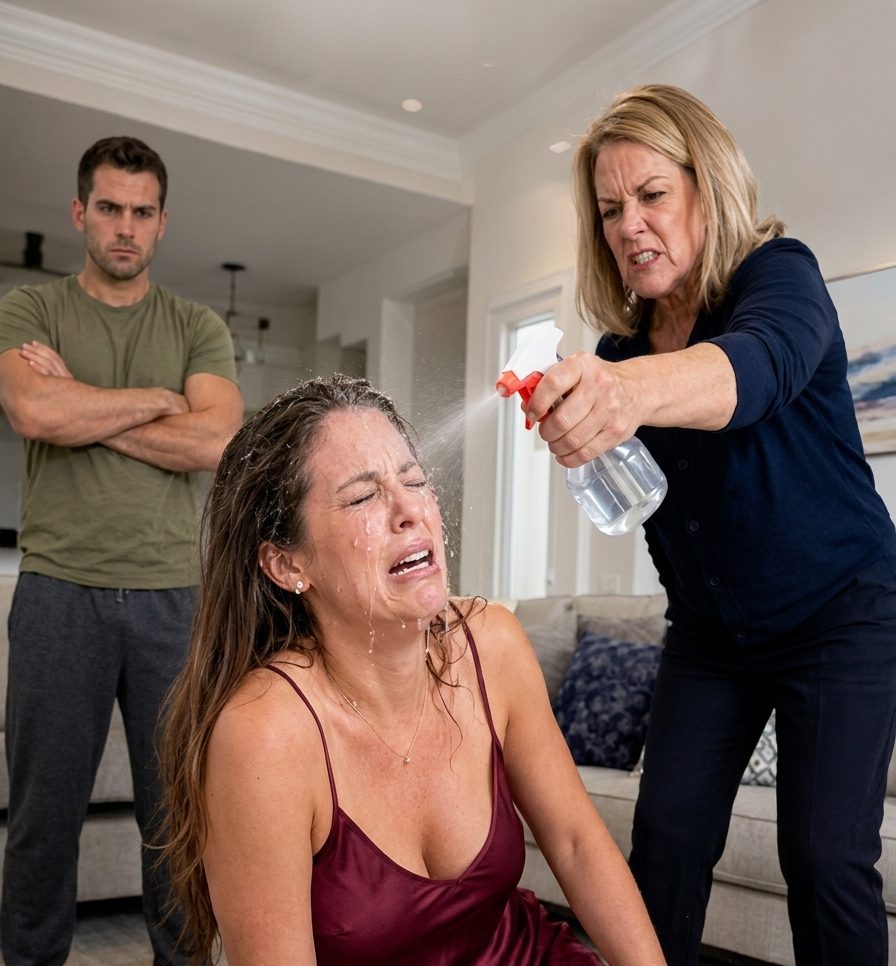
The warning?
It’s a blurry, distant memory now.
The disinfectant?
I don’t think about the burn anymore.
But the lesson?
The lesson is etched into my soul, a reminder of the price of disdain and the value of self-respect.
I walk through the world with my head held high, knowing that I survived the fire and emerged stronger, clearer, and more at peace than I have ever been.
I have found my home, not in a house, but within myself.
And that, my dear reader, is the ultimate victory.
No one can take that away from me.
No one can lock me out of that.
No one can deny me that.
I am finally, truly, entirely home.
The city lights outside my window flicker like distant stars, each one a life, each one a story, each one a potential path.
And as I sit here, drinking my coffee, I know that I am finally walking my own path, and it is a beautiful, wonderful, exhilarating journey.
No more games.
No more betrayals.
No more hidden agendas.
Just the truth.
And the truth is the most liberating thing in the world.
I take one last look at the journal, satisfied with what I’ve written, and I set it down.
I am done with the past.
I am ready for the future.
And I am, for the first time in my life, completely, utterly, and perfectly myself.
And I know, with absolute certainty, that I will never, ever be anyone else’s guest again.
This is my life.
This is my truth.
And this is where I belong.
The story is complete.
And I am happy.
The end.