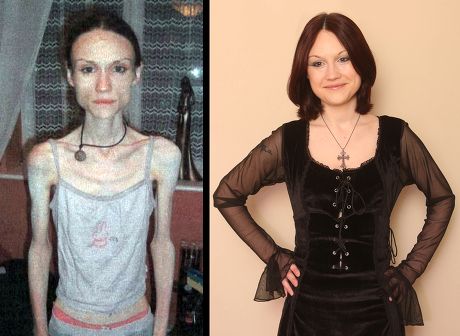
Nicola King, from Andover, Hampshire, weighed only four stone at the height of her battle with anorexia
- Her eating disorder began after she started counting calories at the age of 16
- Nicola’s hair fell out, her periods stopped and she lived with constant physical pain
- Her organs began shutting down, and doctors twice warned her parents that she might not survive
- She spent six months in hospital, where she was sedated and received nutrition through a feeding tube
- After leaving hospital, Nicola gradually began rebuilding her health and later discovered strength training
- She started bodybuilding in 2015 and entered a competition only 18 months later
- Nicola won the Best Body Transformation category at the Pure Elite UK Championships
- At a healthy eight stone 13 pounds, she could deadlift 40 kilograms and hoped to pursue a fitness career
- Nicola said she wanted to use her experience to encourage other people with eating disorders to seek help
From four stone to bodybuilding champion
A young woman who came close to death after her weight dropped to just four stone made a remarkable recovery and became a champion bodybuilder only 18 months after taking up the sport.
Nicola King, from Andover in Hampshire, was 24 when her extraordinary transformation attracted international attention. Years earlier, she had been admitted to intensive care as anorexia caused her body to shut down. Doctors reportedly warned her parents on two occasions that they should prepare to say goodbye because she might not survive.
After spending six months in hospital, Nicola slowly began rebuilding her health. She later found a new sense of direction through the gym and eventually entered competitive bodybuilding. Just 18 months after beginning serious training, she won the Best Body Transformation category at the Pure Elite UK Championships.
Her achievement represented far more than a sporting victory. At her lowest point, Nicola had been unable to provide her body with the nourishment it needed to survive. Years later, she stood on a bodybuilding stage with the strength and confidence to celebrate a body she had once struggled to accept.

Her illness began with counting calories
Nicola said her difficulties began at the age of 16, when she started counting calories. What initially appeared to be an attempt to control her diet gradually developed into a dangerous obsession, and restricting food began to dominate her thoughts and daily life.
As the illness tightened its grip, Nicola’s eating became increasingly limited. At her worst, she would reportedly go for extended periods without eating. Her physical health deteriorated rapidly, but the psychological effects of anorexia made it extremely difficult for her to recognize the danger and change her behaviour.
Her weight eventually dropped to four stone—equivalent to approximately 56 pounds or 25 kilograms. Such an extremely low weight placed enormous pressure on her heart and other vital organs. Her hair began falling out, her menstrual cycle stopped and she experienced constant physical pain.
Anorexia had affected nearly every area of Nicola’s life. Her body desperately needed energy, but the illness continued telling her to avoid food. The conflict left her physically exhausted and emotionally overwhelmed, while her family watched her become increasingly unwell.

Doctors feared she would not survive
Nicola’s condition eventually became so critical that she was taken to an intensive care unit. Her body had started shutting down, and she could no longer maintain her health without emergency medical intervention.
Doctors sedated Nicola and provided nutrition through a feeding tube. The treatment was necessary to keep her alive while medical staff worked to stabilize her failing body. According to Nicola, doctors twice told her parents that she was unlikely to survive and encouraged them to say goodbye.
She later recalled feeling as though she wanted to die and was already physically dead. Her description illustrated the severity of the mental illness accompanying her physical collapse. Anorexia was not simply influencing what she ate; it had taken away her sense of hope and convinced her that recovery was impossible.
For Nicola’s parents, the experience was devastating. They could do little except remain by their daughter’s side while doctors attempted to save her. Hearing that she might not live forced the family to confront the possibility that anorexia could take her life.

Six months of hospital treatment
Nicola remained in hospital for six months. The process of stabilizing her body was only the first stage of recovery, because restoring weight did not automatically remove the thoughts and fears created by the eating disorder.
She was eventually discharged in June 2012. Leaving hospital was a major milestone, but Nicola still faced a difficult and uncertain future. Recovery required her to rebuild her strength while continuing to challenge the disordered thinking that had controlled her since she was a teenager.
The transition back into ordinary life was not immediate or easy. After months of intensive treatment, Nicola needed to relearn how to trust her body and provide it with enough energy. She also needed a reason to look forward to each day rather than returning to the restrictive habits that had almost killed her.
Although Nicola survived the medical crisis, she was open about the fact that the psychological struggle did not disappear. She described living with anorexic thoughts as being like having an abusive partner inside her head—an internal voice that could remain cruel and controlling even when her physical health appeared to be improving.

Discovering a healthier form of exercise
As Nicola’s recovery progressed, she started attending a gym. Exercise had the potential to be complicated for someone recovering from an eating disorder, but for Nicola, supervised and purposeful training gradually became a positive part of rebuilding her life.
Instead of using exercise solely to become smaller, she began focusing on strength and physical capability. The gym gave her a reason to nourish her body, because training effectively required energy, rest and a balanced diet. Her attention slowly shifted from reducing numbers on a scale to increasing what her body could safely accomplish.
Nicola said the gym gave her focus and something to get up for in the morning. She viewed it as both therapy and an escape—a place where she could challenge herself in a constructive way and experience the satisfaction of becoming stronger.
That new perspective played an important role in her recovery. For years, Nicola’s relationship with her body had been defined by punishment, deprivation and fear. Strength training offered a different message: her body deserved care and could achieve impressive things when it was properly supported.
Beginning her bodybuilding journey
Nicola became involved in bodybuilding in 2015. The sport required consistent resistance training, careful preparation and adequate nutrition—everything her anorexia had previously tried to prevent.
She began developing muscle and setting performance goals. Rather than measuring success by how little she could eat, she learned to value strength, energy and progress in the gym. The change represented a fundamental shift in the way she understood food and exercise.
Her transformation took place remarkably quickly. Within approximately 18 months of starting her bodybuilding journey, Nicola was ready to step onto a competitive stage. She entered the Pure Elite UK Championships, where athletes were judged on their physiques, presentation and transformation.
For Nicola, appearing in front of judges and spectators required enormous courage. Her body had once been the source of intense fear and distress, but she was now standing under stage lights and presenting it as evidence of recovery, discipline and strength.
Crowned Best Body Transformation
Nicola’s hard work was rewarded when she won the competition’s Best Body Transformation category. The title recognized not only her physical change but also the extraordinary personal story behind it.
Winning was an emotional moment for someone who had once believed she would not have a future. Nicola had gone from lying critically ill in intensive care to confidently competing alongside other trained athletes. The contrast between those two moments made her victory particularly powerful.
Her transformation quickly attracted attention beyond the bodybuilding community. News organizations shared her before-and-after photographs, and her story reached readers around the world. Nicola also appeared in national media and spoke about her experiences publicly.
She said the reaction was overwhelming but described the messages of support as incredible. Although the sudden attention became difficult to manage at times, she remained interested in speaking about anorexia and encouraging others who were facing similar struggles.
Rebuilding her strength through balanced nutrition
By the time her story became widely known, Nicola weighed a healthier eight stone 13 pounds—approximately 125 pounds or 57 kilograms. She followed a balanced diet designed to support her strength, recovery and bodybuilding goals.
Her relationship with food had changed significantly. Eating was no longer something to avoid at all costs; it had become an essential part of training and caring for her body. Proper nourishment enabled her to develop muscle, recover after workouts and continue improving her performance.
Nicola could deadlift as much as 40 kilograms—approximately 88 pounds. Although she became known as a champion bodybuilder rather than a competitive weightlifter, lifting weights was central to her training and physical recovery.
The weight on the bar symbolized something much greater than athletic ability. At four stone, Nicola’s body had struggled to perform the basic functions needed to keep her alive. Being able to lift 40 kilograms demonstrated how dramatically her health, energy and confidence had changed.
“For the first time, I am proud of myself”
Nicola said bodybuilding gave her a feeling of liberation. Training allowed her to push her body, but in a controlled and positive way rather than through starvation and self-punishment.
She also said that, for the first time, she felt proud of herself. That sense of pride marked one of the most meaningful parts of her transformation. Winning a trophy was important, but learning to appreciate her strength after years of self-destructive thinking was an even greater achievement.
Nicola’s experience showed that recovery was not as simple as reaching a particular weight or looking physically healthy. She continued to experience difficult thoughts, even after leaving hospital and becoming a bodybuilding champion. Her honesty challenged the idea that a dramatic before-and-after photograph could capture the full complexity of an eating disorder.
She acknowledged that she still struggled every day. Rather than presenting herself as completely cured, Nicola described recovery as a continuing process that required awareness, support and determination.
Hoping to help other people
After her bodybuilding success, Nicola hoped to build a career in fitness. Having discovered how strength training helped give her life direction, she wanted to use that experience in her professional future.
She also expressed an interest in campaigning to raise awareness about anorexia. Nicola believed that her personal experience could help her understand the fear and isolation felt by people who were still trapped in the illness.
Her story offered hope, but it also carried an important warning. Eating disorders are serious mental illnesses that can affect every organ in the body and become fatal without treatment. Nicola survived because she received intensive medical care, nutritional support and time to recover.
Her bodybuilding journey should not be interpreted as a universal treatment plan. Exercise can become unhealthy or compulsive for some people with eating disorders, so recovery plans should be developed with qualified medical and mental-health professionals. What helped Nicola was the broader shift toward nourishment, strength and purpose—not simply going to the gym.
A transformation that went far beyond appearance
The photographs documenting Nicola’s journey show a striking physical difference, but they tell only part of the story. Behind the images were years of illness, six months of hospitalization and the continuing work required to manage anorexic thoughts.
Her transformation was ultimately about moving from self-destruction toward self-respect. Nicola learned to see food as fuel, exercise as a source of strength and her body as something capable of accomplishment rather than something she needed to punish.
Only a few years after doctors feared she would die, she stood onstage as a bodybuilding champion. The woman who had once dropped to four stone was now eating a balanced diet, lifting weights and planning a future in fitness.
Nicola’s journey remains a powerful example of what recovery can make possible. It does not suggest that the process is quick or easy, but it shows that even after a life-threatening crisis, a person can rebuild strength, confidence and hope with appropriate care and continued support.
Support note: If you or someone you know is experiencing symptoms of an eating disorder, contact a doctor or a qualified eating-disorder service. In the United Kingdom, Beat offers support at beateatingdisorders.org.uk. If someone is in immediate danger, contact emergency services.