An unexpected discovery changed everything
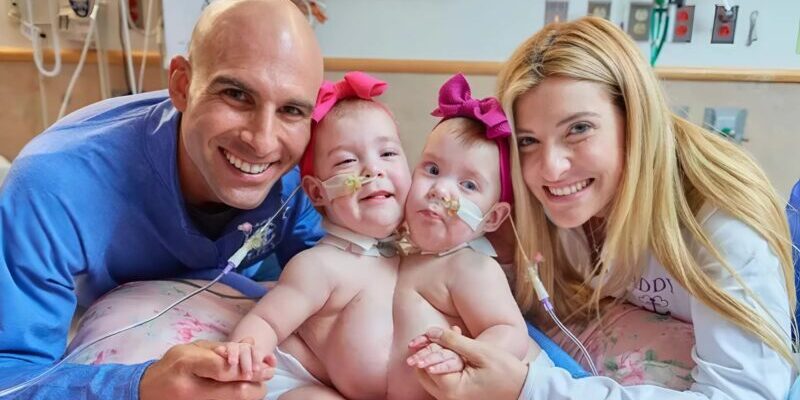
Maggie and Dom Altobelli were preparing to welcome a baby when a routine pregnancy appointment changed their understanding of the future. The Chicago-area couple had believed they were expecting one child. Instead, an ultrasound revealed two babies—and showed that the girls were physically connected. The discovery introduced questions the parents had never anticipated: how their daughters were joined, what medical support they would need and whether separation might eventually be possible. What had begun as familiar preparations for parenthood became a journey requiring specialist advice, difficult decisions and a willingness to travel far from home.
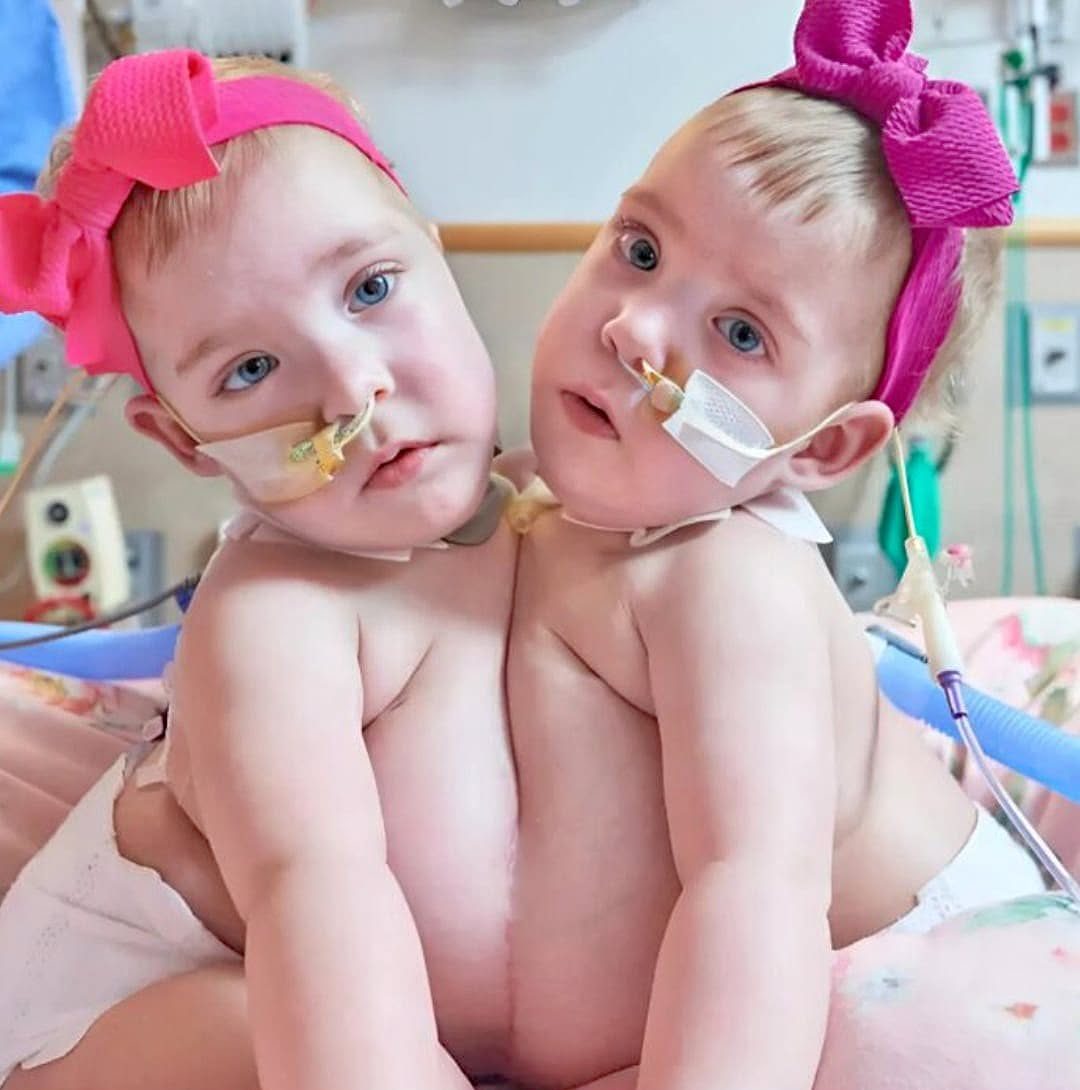
The twins, later named Addison and Lilianna and affectionately called Addy and Lily, were joined at the chest and abdomen. Their condition is known as thoraco-omphalopagus, a term describing the location of their connection. For their parents, the diagnosis was not simply a medical definition. It meant learning about complex anatomy while trying to understand what life might look like for two daughters they had not yet met. The family began evaluating hospitals, seeking a team with the experience to assess the girls individually and explain their options carefully.

Finding specialist care in Philadelphia
The Altobellis were referred to Children’s Hospital of Philadelphia, known as CHOP, where specialists had extensive experience caring for conjoined twins. The family’s decision involved more than choosing a place for a possible operation. Their daughters would need coordinated care before birth, during delivery and throughout the months that followed. The hospital’s fetal diagnosis and treatment team could bring together the specialists needed to plan that entire process. After meeting the team, Maggie and Dom chose Philadelphia as the place where they would begin this unfamiliar chapter.
Their first evaluations were thorough. Maggie underwent detailed prenatal imaging so doctors could understand exactly how the babies were connected and which structures they shared. According to the family’s account published by CHOP, one ultrasound appointment lasted approximately five hours. The examination was not simply intended to confirm that the girls were conjoined. It was designed to build a precise picture of their anatomy, identify potential complications and determine whether separation could be considered. Each finding helped the team replace some uncertainty with information that could guide a practical plan.

Separate hearts offered an important possibility
The evaluations established that Addy and Lily shared a chest and abdominal wall, a diaphragm and a liver. Crucially, however, each girl had her own healthy heart. Doctors also found that the shared liver’s blood-vessel and drainage arrangements were favorable for division. These findings made the twins good candidates for separation surgery, according to CHOP. That assessment did not make the operation simple or remove its risks. It meant the team had identified an anatomical basis for moving forward with careful preparation rather than assuming separation would be impossible.
Every pair of conjoined twins has a distinct medical situation, which is why an outcome for one family cannot automatically predict an outcome for another. The structures shared, the way blood flows through them and the health of each child all influence the options available. In Addy and Lily’s case, extensive testing gave the medical team a clearer understanding of those factors. For Maggie and Dom, the possibility of separation offered a direction for planning. There were still many challenges ahead, but their daughters’ care now had an achievable goal supported by detailed investigation.

Preparing for a high-risk birth
As the delivery approached, the family relocated to Philadelphia so Maggie could receive closer monitoring and the babies could have immediate access to specialist care. Moving away from home was a significant commitment, but it allowed the hospital to coordinate the pregnancy and delivery more closely. Teams considered not only how to deliver the girls safely but also how to position and care for them immediately afterward. Their connection meant that standard routines could not simply be followed without adaptation. Planning had to account for two babies whose needs were closely linked.
The delivery team carried out a simulated rehearsal of the high-risk cesarean birth. That preparation helped staff work through positioning, equipment and the sequence of care before the actual delivery. Addy and Lily were born on November 18, 2020 in CHOP’s Garbose Family Special Delivery Unit. Their arrival was an important milestone, but it marked the beginning of another demanding phase rather than the end of the medical journey. The girls needed intensive care, and the team would continue assessing their condition as they grew outside the womb.

Months of intensive care followed
For the first four months, Addy and Lily were cared for in the hospital’s newborn and infant intensive care unit. Breathing difficulties created early challenges because their chest wall and diaphragm were shared. Their parents took shifts at the bedside while clinicians monitored and supported the babies. CHOP’s account also describes bedside cameras that allowed Maggie and Dom to see the girls remotely. These details reflect how much of early family life unfolded within a medical setting, where moments of closeness existed alongside monitoring, treatment and uncertainty.
A turning point came when each girl received a tracheostomy tube to support breathing. Their condition became more stable, allowing them to move to the pediatric intensive care unit. The transfer did not mean all difficulties had disappeared, but it represented progress. Caring for the twins required overlapping expertise in breathing support, nutrition, development, imaging and surgery. Nurses, therapists and other specialists were part of the process every day. The eventual operation depended on this sustained care, which helped the girls become stronger while the surgical plan continued to develop.
Their personalities emerged while they grew
Despite the demands of intensive care, Addy and Lily’s early lives were not defined only by procedures. The hospital’s account describes their personalities emerging through interactions with their parents, staff and one another. They sometimes fell asleep with their arms around each other and began reaching developmental milestones. Physical and occupational therapists adapted activities to help them develop while they remained connected. These experiences remind readers that the children at the center of a complex medical story were also two babies learning, responding and forming relationships in the ordinary ways available to them.
Maggie and Dom described feeling genuine affection and support from the people caring for their daughters. Over the family’s extended hospital stay, staff became familiar with the girls as individuals rather than simply as a rare surgical case. That personal connection mattered alongside technical expertise. The parents needed information about treatment, but they also needed a supportive environment in which to navigate months of uncertainty. The story of the separation therefore includes both highly specialized medicine and the daily work of making hospital life more manageable for a young family.
Preparing enough skin for reconstruction
By May 2021, the girls had become strong enough to begin another important stage of preparation. Plastic surgeon Dr. David Low placed skin expanders in each child. These devices were gradually filled with fluid over the following months, gently stretching the skin. The purpose was practical: once the twins were separated, each would need enough skin to cover areas of the chest and abdomen that had previously been connected. Preparing that coverage in advance was an essential part of planning for reconstruction, not simply a cosmetic step.
The gradual process demonstrates why separation could not be approached as one isolated day in an operating room. Surgeons had to consider how each girl’s body would be stabilized and covered afterward. They needed the twins to be sufficiently strong, their anatomy to be understood and the necessary tissue to be available. Much of this preparation was less visible than the final surgical milestone, but it made that milestone possible. The months before the operation were active treatment, with each stage contributing to the safety and feasibility of the next.
Imaging and rehearsals guided the surgical plan
As the operation approached, the surgical team met regularly to examine the girls’ anatomy and review the planned steps. Particular attention was given to the shared liver and its blood supply. Understanding where vessels crossed and how the organ could be divided was central to the procedure. Radiologists created three-dimensional models that could be assembled and separated, helping clinicians visualize the relationship between the twins’ bodies. Those models allowed the team to work with a physical representation of anatomy that would otherwise be harder to study from images alone.
The team also conducted walkthroughs resembling dress rehearsals. Specialists needed to understand their own responsibilities and how those responsibilities would change once the girls were separated. This was an operation involving multiple disciplines and two patients whose care initially overlapped. Preparation helped coordinate equipment, personnel and the sequence of events. It could not eliminate every risk, but it gave the team a shared plan grounded in detailed knowledge. The celebrated result was therefore the culmination of repeated analysis and practice, rather than a single extraordinary decision made on the day.
A 10-hour operation marked the turning point
On October 13, 2021, when Addy and Lily were approximately 10 months old, the surgical team carried out their separation. More than two dozen specialists were involved, including surgeons, anesthesiology professionals, radiologists, nurses and other staff. Each girl had a dedicated anesthesiology team monitoring her throughout the operation. The procedure lasted approximately 10 hours. At 2:38 p.m., the twins were officially separated, marking the moment when the shared anatomy that had connected them since before birth had been divided.
Separation was followed by another demanding phase within the same operation. The surgical team divided into two groups, with each focusing on one child. Specialists rebuilt and stabilized the girls’ chest and abdominal walls, using mesh and the skin expanded during the preceding months. Cardiac care was also part of ensuring that their hearts were positioned appropriately and functioning well. The operation was not complete simply because the babies were no longer connected. Each needed a carefully reconstructed body capable of supporting recovery and continued growth.
Their parents saw them in separate cribs
For Maggie and Dom, seeing their daughters after surgery was an emotional moment. Until then, Addy and Lily had shared the same physical space in a way that shaped every aspect of care. Now their parents could see them resting separately, each with her own body and crib. In the hospital’s account, both parents described the experience with amazement. The medical achievement was substantial, but its meaning for the family was immediate and personal: a long-planned possibility had become real, and their daughters had entered a new stage of life.
The parents had written a letter to the medical team before the operation, addressing the clinicians as Addy and Lily’s “Dream Team.” It was read in the operating room before surgery began. The letter reflected their gratitude and the hopes they held for the girls’ future. That gesture captures the relationship between a family facing an extraordinary situation and the professionals responsible for guiding them through it. Behind every scan, rehearsal and surgical step were two children whose parents were hoping for lives that included far more than hospital care.
Recovery continued after separation
The successful operation did not mean the girls could immediately leave intensive care. They remained in CHOP’s pediatric intensive care unit for approximately seven weeks after surgery. Recovery required continued monitoring and support as their bodies adjusted to being separate. The hospital team also coordinated with specialists at Lurie Children’s Hospital in Chicago to arrange their transfer. This transition was another carefully planned stage, ensuring that the progress made in Philadelphia could be supported by clinicians closer to the family’s home.
On December 1, 2021, the family traveled back to Chicago, with each twin accompanied by one parent. After more than a year living in Philadelphia, returning to their home region was a major change. The girls spent about two further weeks at Lurie Children’s Hospital before being discharged in time for Christmas. Their neighbors decorated the family’s yard, and the Altobellis spent the holiday at home together. The occasion represented something that had once seemed distant: ordinary family life beginning outside the hospital.
A later update showed the girls thriving
At the time of CHOP’s early post-separation account, Addy and Lily still needed tracheostomy tubes and ventilator support while they developed strength and adjusted to breathing independently. That information describes a particular point in their recovery, not their permanent condition. In an October 2024 update, the hospital showed the sisters as active young children and reported that they were thriving. Their parents discussed progress away from ventilator support and the removal of their tracheostomy tubes, along with continued attention to development, eating and physical activity.
The later update shifted the focus from whether separation could succeed to how the girls were growing afterward. Their parents described taking them to parks, encouraging movement and looking forward to raising loving, respectful children beyond the demands of intensive medical care. That is the fullest meaning of Addy and Lily’s story. The operation was an extraordinary achievement, but it served a larger purpose: giving two children opportunities to develop as individuals while remaining sisters. Their journey is one of specialist teamwork, sustained family commitment and a future increasingly filled with the experiences of childhood.