“I want copies of everything,” Grandma said. Her voice was steady, but she needed both hands to close her purse. The clerk showed us where to request them and explained the copying fee. I remember being grateful for that ordinary transaction: something cost a few dollars, someone told us exactly what it was, and nobody lied.
In the car, Grandma opened the envelope marked HOUSE DEED. “I thought keeping this somewhere safe would matter,” she said. “It still matters,” I answered, although I didn’t yet know how. Later, her lawyer explained that the old deed helped establish the ownership history, but possession of the paper did not prevent someone from recording another document. Grandma listened without pretending that was what she had understood all along.
At the bank, she asked to speak for herself. The fraud report from the night before was already on file, and a manager reviewed the account activity and the authority my father had been given. “I want his access stopped,” Grandma said. “And I want copies of the documents you relied on.” Nobody handed her fifty-five thousand dollars across the desk; protecting what remained and investigating what had happened were separate jobs.
The manager helped secure the account and documented her instructions. We took the power-of-attorney paperwork to an elder-law attorney that afternoon. Before beginning, the lawyer asked Grandma whether she wanted me in the room. “Yes,” she said. “But ask me the questions, not him.”
The document had been intended for a limited period after her knee surgery. Its listed powers covered banking and bill payment, not transferring her house. “A power of attorney is not ownership of your money,” the lawyer explained. “And this one did not authorize a real-estate conveyance, much less putting your house in his wife’s name.” She cautioned that a recorded deed still needed to be addressed formally, not simply ignored.
Grandma signed a written revocation, and the lawyer arranged notice to Arthur and the relevant institutions. Copies went where they were needed, including into the work of challenging the property transfer. “Does this give Ivan control now?” Grandma asked. “No,” the lawyer said. “Revoking your son’s authority does not appoint someone else.”
That distinction mattered more to her than I expected. My first instinct had been to take her bank cards, organize every bill, and promise that nobody would ever touch her money again. Instead, I asked, “Would you like me to help sort these copies?” She nodded and handed me half the stack. It was a smaller promise, but one I could make without taking anything away from her.
Only then did we drive to her house. There was a real-estate sign in the yard with SALE PENDING attached beneath it. The porch chairs were gone, and a contractor’s van stood where Grandpa used to wash his truck. Grandma stared through the windshield. “They didn’t even leave my chairs.”
Mom opened the front door when we approached. For a moment, she looked genuinely relieved. “Thank God, we’ve been trying to reach you.” Grandma stopped at the bottom step. “You left me in a lobby without finishing the paperwork, Wendy. You don’t get to begin this conversation by sounding worried about where I went.”
Dad appeared behind her, holding a paint sample. “Mom, you weren’t supposed to come back here yet.” I heard the word yet and looked at the sign again. Grandma said, “When was I supposed to come back?” He glanced at my mother before answering, “We needed to get things settled.”
“Whose things?” I asked. Dad turned on me. “Stay out of this, Ivan. You haven’t been here dealing with her every day.” Grandma lifted her chin. “Arthur, I had knee surgery. You made grocery trips. Neither of those things gave you my house.”
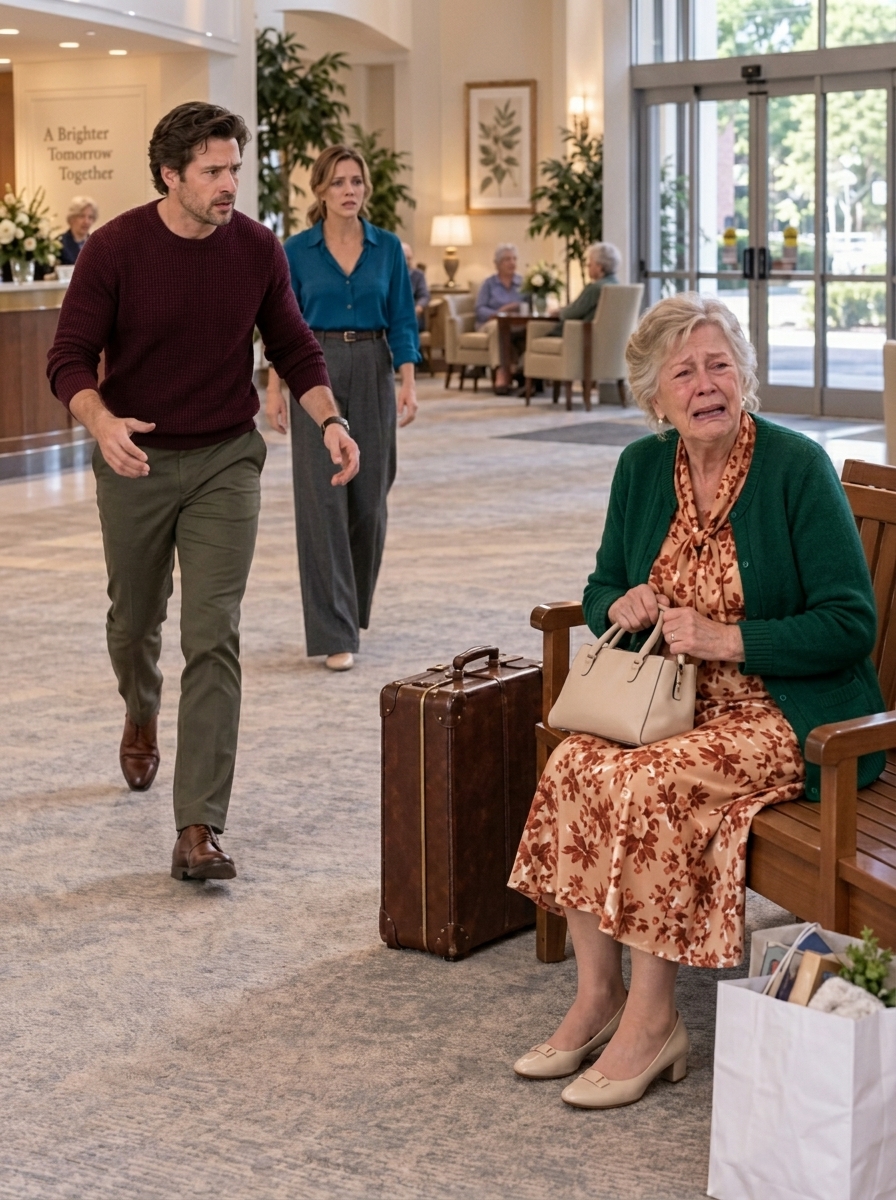
Mom began talking about maintenance costs, the work they had done, and how much easier a facility would be. “Then you could have asked me about moving,” Grandma said. “You packed a suitcase and told me we were going to lunch.” Dad put down the paint sample. “It was going to come to me eventually.”
The silence after that was worse than shouting. Grandma looked at her son for a long time. “Eventually is not a date you get to choose,” she said. I thought she might try the door, but she turned toward me instead. “We’re leaving. I’m not giving them another argument to call confusion.”
“Don’t force entry or arrange to change the locks,” her lawyer told us. “I’m notifying the broker and the closing company that ownership is being challenged.” The sale had not been completed, and it stopped while the title problem was examined. Within days, the court issued temporary restraints against further dealings with the property. “This protects the position while the case proceeds,” the lawyer explained. “It isn’t a final ruling returning everything to normal.”
A temporary arrangement also allowed Grandma to resume living there without my parents controlling access. I stayed for the first week after clearing leave with my employer. On the first night, she walked from room to room, touching the backs of chairs as though checking that they were real. Her desk drawers had been emptied into a cardboard box. “So they did look,” she said, holding the envelope against her chest.
The facility provided its records in response to the appropriate requests. Grandma had never completed admission or agreed to become a resident, and no facility bill explained those withdrawals. She chose to make reports to the police and adult protective services, with her lawyer helping her organize the documents. “I’m not asking you to punish my son because I’m angry,” she told the investigator. “I’m asking you to find out where my money went.”
“Twelve thousand went toward Arthur’s vehicle loan,” her lawyer told her when the financial records came together. “Eighteen thousand went toward credit-card debt, and twenty-five thousand went into Wendy’s account.” That last amount was still there when legal restrictions preserved the traceable funds. Grandma held the statement flat on the table. “Not one of these is a bill for my care?” she asked. “Not from the records we have,” came the answer.
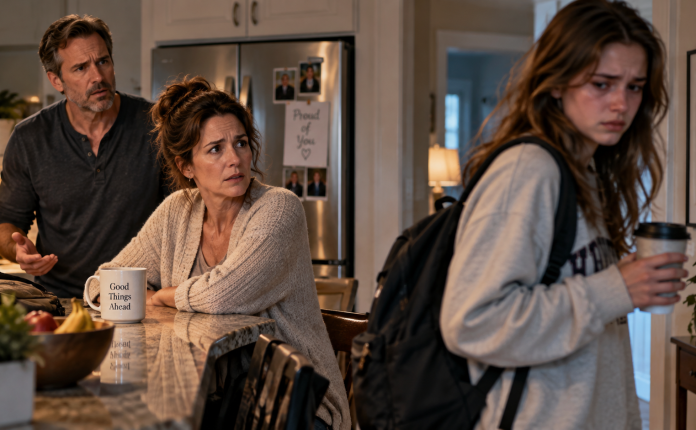
Dad called me after he learned about the reports. “You need to get her to calm down,” he said. “This could ruin our lives.” I stood in Grandma’s kitchen, looking at the grocery bag in which they had packed her medication. “She’s calm,” I told him. “That isn’t the problem you need to solve.”
Mom tried a different approach. “We were overwhelmed, Ivan. You have no idea how hard this has been.” I told her I believed that helping someone recover could be tiring. “But you could have asked for help. You put the house in your own name, and you haven’t explained that by telling me you were tired.”
The civil case took months, with lawyers on both sides, document requests, and financial disclosures. “We have a negotiated resolution for the court to approve,” Grandma’s attorney eventually told her. “The transfer will be addressed, and we’ll record the documents that restore and confirm your title.” Grandma asked, “So it’s mine again?” The attorney cautioned her to wait until the court and recording steps were finished. Only after checking the updated record did she say, “Your house is secure again.”
The prospective buyer withdrew, and the earnest money was returned through escrow. Grandma asked twice whether those people had lost their deposit because of my parents. “They shouldn’t pay for believing a listing,” she said. Nobody made the buyer part of some revenge plan, and nobody let the canceled sale substitute for addressing the money already taken.
The twenty-five thousand dollars was returned through the legal resolution. A voluntary vehicle sale produced another ten thousand toward what my parents owed, leaving twenty thousand unpaid. The recovered thirty-five thousand did not make Grandma whole: she had legal expenses, disrupted care arrangements, and a house that needed putting back in order. “Don’t tell me I got everything back,” she said when I nearly used those words. “Just tell me what the numbers are.”
Criminal charges followed the investigation, and both parents eventually entered guilty pleas to charges arising from the scheme. Dad received a prison sentence; Mom’s separate sentence included supervised probation. “The restitution orders credit what you’ve already recovered,” Grandma’s lawyer explained. “You can’t collect the same loss twice.” Grandma nodded, then asked how soon the balance would arrive. “I can explain what they owe you,” the lawyer said, “but I can’t promise how quickly they’ll be able to pay.”
There was no cheering after the sentencing. Grandma had raised the man who was being taken away, and she cried in the car afterward. “I keep remembering him at six,” she said. I handed her a tissue and waited. Then she added, “But I can’t pretend he’s still six just because I wish I could protect him from what he did.”
Dad’s first letter blamed pressure, debt, and how frightened he had been about the future. Grandma put it aside after the first page. A later letter was different. “I told myself I was borrowing what I would inherit,” he wrote. “I knew you had not agreed, and I kept going anyway.”
She read that sentence more than once. “At least that part is true,” she said. It did not earn him forgiveness or erase the consequences, but it was the first admission that did not disguise his choices as an act of care. Grandma wrote back when she was ready, not when he asked. She told him she could love her son and still refuse him access to her money or home.
Mom asked to visit several times. Grandma eventually agreed to one short meeting with a support person present. “I’m sorry we left you there,” Mom said. Grandma looked at her and answered, “You also accepted my house. I need you to say that part.” Mom lowered her eyes, then said, “I knew you hadn’t agreed to it.”
That was where the meeting ended. Grandma was not obliged to make either parent feel better for finally admitting what the documents already showed. She allowed occasional written contact afterward, but she did not restore the relationship to what it had been. When relatives called her unforgiving, she stopped taking their advice. “They can have opinions,” she told me. “They don’t get signing authority.”
Rebuilding was less dramatic than the courthouse visits. “I need help with the stairs and the heavier shopping,” Grandma told the home-care provider she chose. “I don’t need someone to tell me when to go to bed.” She hired an independent financial professional and kept reviewing her own statements, and we updated her care preferences and emergency contacts with her permission. “You can be the person they call,” she told me. “That doesn’t mean you become the person who decides everything.”
I learned to ask before moving furniture, sorting her mail, or making appointments. Some evenings she needed reassurance that a misplaced pair of glasses was not proof my father had been right about her. Other evenings she told me to go home because she wanted to watch her program in peace. Both were part of getting her confidence back. Being grateful to me did not mean she owed me constant access to her life.
One year after the call from the nursing facility, I drove the same 190 miles to visit. The brown suitcase was on the bed, open and half packed. For a second, my stomach dropped. Grandma noticed and said, “Three nights at the lake with my friend June. I booked it myself.”
The house was hers again, the remaining restitution was still being paid down, and the family was not magically repaired. But her porch chairs were back, and the folder containing her financial records was in a place she had chosen. She handed me a copy of her travel details. “Emergency contact,” she reminded me, and I smiled. “I remember the job description.”
Before I left, we decided to get something to eat. Grandma settled into my passenger seat and clicked her seatbelt into place, the same small sound I still remembered from that terrible afternoon. This time, I waited for her to look at me. “Where would you like to go?” I asked. “Lunch,” she said. “And afterward, you can bring me home.”