I had a countdown app on my phone. Two hundred and seventy days. I checked it every morning before formation and every night before I fell asleep in a bunk that smelled like dust and other men’s sweat. My wife’s face was my lock screen. In my helmet, folded into the liner where nobody could see it, I kept a photograph from our wedding day. Alina laughing, her head thrown back, my arm around her waist. I looked at it when the mortars were close enough to rattle the windows.
I am thirty-two years old. I am a sergeant in the United States Army. For nine months I was deployed overseas, and I told everyone in my unit the same thing: my wife was going to cry when I walked through that door.
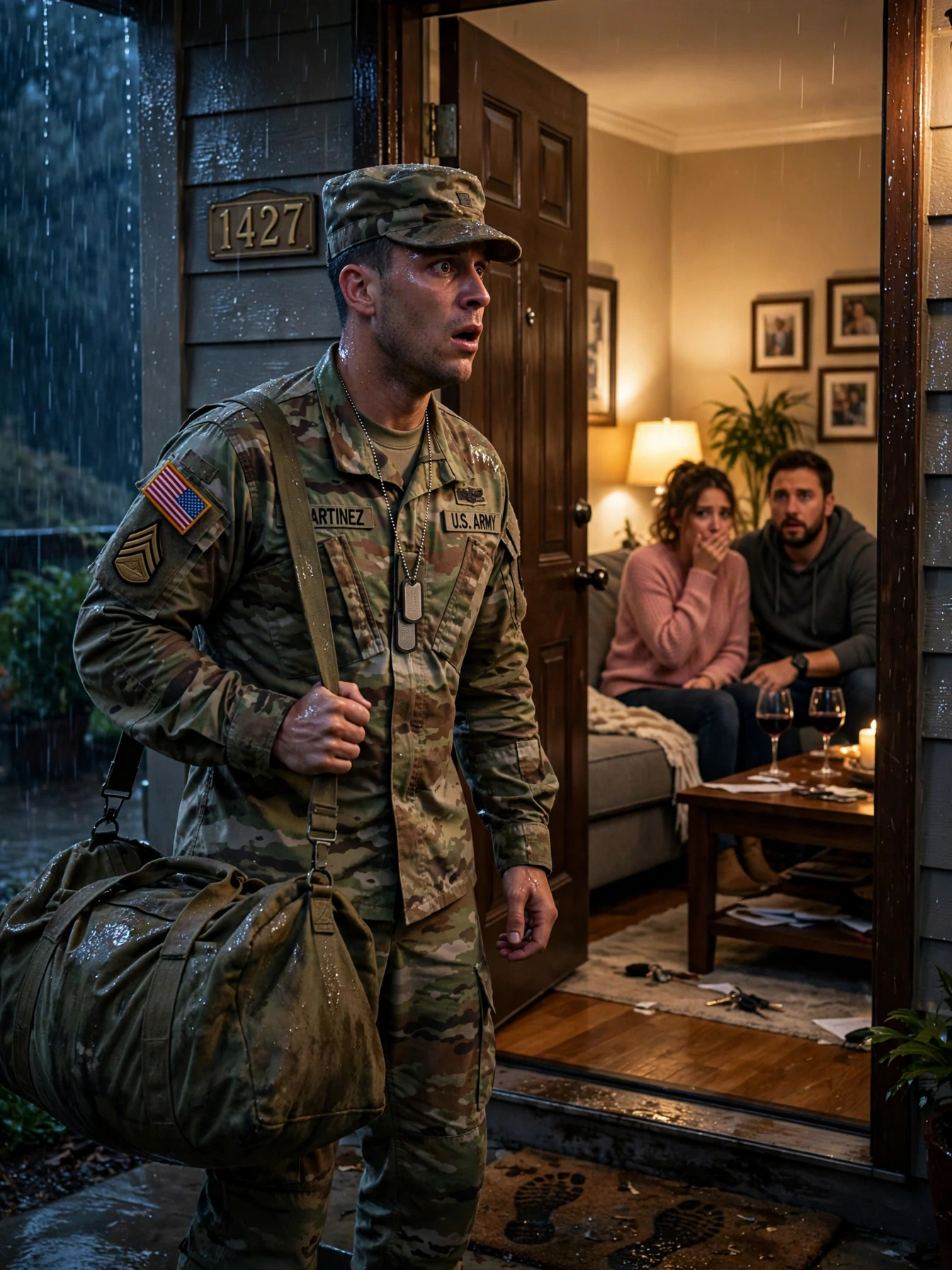
I came home two weeks early. I didn’t tell her. I wanted the surprise — I had rehearsed it in my head for months, the way she would drop whatever she was holding and run to me. I landed at 2 PM on a Tuesday, took a cab straight from the airport with my duffel bag on my shoulder and a bouquet of flowers in my hand. Cheap flowers, airport flowers, the kind wrapped in crinkling plastic. I didn’t care. I had love in my hands and I was bringing it home.
I turned my key in the lock of the house I had bought with my signing bonus, the house where we had planned to raise children.
The television was on. There were two coffee mugs on the kitchen counter. A man’s jacket was draped over the arm of our couch — our couch, the one Alina and I had picked out together, arguing happily in the furniture store about whether the gray was too dark.
I stood in that doorway with the flowers dying in my hand, and I heard my wife laughing in our bedroom.
I am a trained soldier. I did not burst in. I went still. I set the flowers down on the entryway table, very carefully, the way you set down something that might explode. I took out my phone and I started recording.
I walked down the hallway of my own house like it was a building I was clearing. The bedroom door was open.
Alina was in our bed with another man. Clothes everywhere — hers, his, tangled together on the floor I had vacuumed before I left, joking that she’d let the place go to ruin without me. They didn’t hear me at first. They were laughing about something.
When Alina saw me, she screamed. The man — a coworker from her office, a man named Derek — grabbed his pants and ran for the bathroom.
I kept recording. My voice, when I finally spoke, was flat. Empty. “Nine months,” I said. “I was gone nine months.”
Alina was crying, pulling the sheet around her. “Marcus, please, let me explain—”
“Explain what?” I said. “That you moved him into my house? That jacket’s been on my couch, Alina. Those mugs — you’ve been playing house while I was getting shot at.”
Derek came out of the bathroom half-dressed, holding his shoes. “Man,” he said, “I didn’t know she was married—”
“Get out of my house,” I said. Quietly. The quiet was worse than shouting would have been. I know, because I’ve heard men shout before they broke. The quiet ones are the ones who have already broken.
After Derek left, Alina tried everything. Tears. Apologies. “It didn’t mean anything, it was just—” She reached for me and I stepped back, and the look on her face when I did that will stay with me longer than anything else from that day. Longer than the jacket. Longer than the laughing.
I kept asking one question. “How long?”
She whispered: “Four months.”
Four months. While I was sending her half my paycheck. While I was calling her every Sunday on a satellite phone, counting the seconds. While I was keeping her photograph in my helmet.
I picked up my duffel bag and I walked out. I didn’t go back that night. I went to my brother’s house, and I sat on his couch, and I didn’t say a word for three hours. He didn’t ask me to. He just sat with me. That’s what brothers are for.
I didn’t sleep. I stared at his ceiling and replayed it — the jacket, the mugs, her face. Four months.
The next morning, my brother said, “You need to check your bank account.”
I hadn’t looked in weeks. Alina handled the money — she was good at it, or so I believed. She paid the bills, managed the budget, told me we were saving. I logged in on my brother’s laptop, and I felt my stomach drop through the floor.
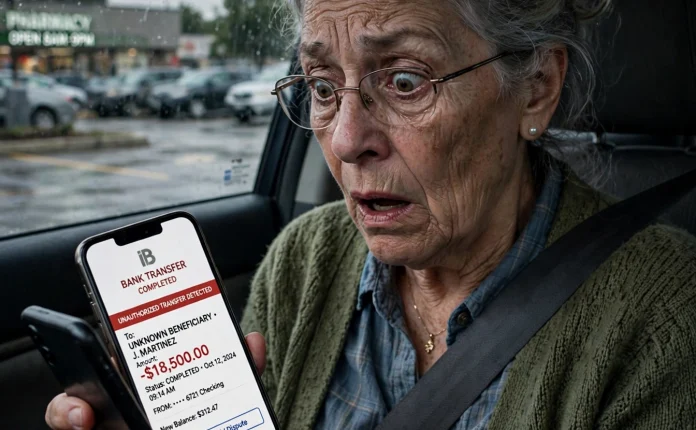
Eighteen thousand dollars. Gone. Vanished over four months in transfers to an account I didn’t recognize.
I called the bank with shaking hands. The representative was professional, detached. The transfers had gone to Derek. Derek’s account. My deployment pay — my combat pay, money I earned while people were trying to kill me — had been funding her boyfriend.
Alina hadn’t just cheated. She had been feeding him with my money.
I drove to the house. Alina was there. There were packed bags by the front door — she had clearly been planning to leave before I caught her, which meant the timeline in my head rearranged itself again, and I understood that I had interrupted not just an afternoon but an exit.
“Where’s my money, Alina?”
She cried. “Derek said he’d pay it back—”
“Derek said.” I laughed, and it was a terrible sound. “You gave my combat pay to another man.”
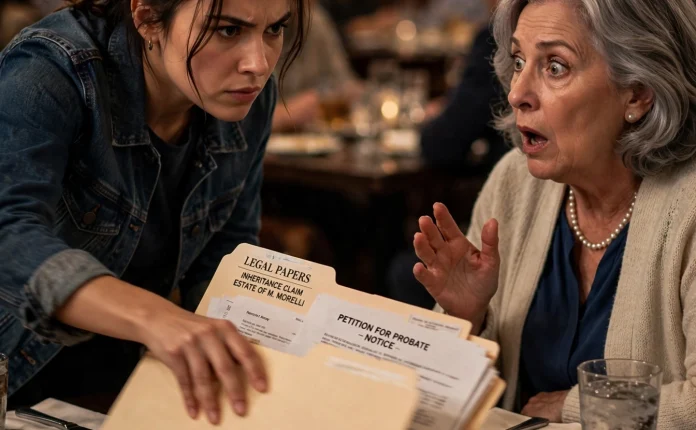
But the worst was still coming. A friend from JAG — we’d served together, he owed me nothing and helped me anyway — pulled the property records as a favor. What he found made him call me at midnight.
“Marcus. She started refinancing paperwork on the house. If you’d come home two weeks later, on schedule, she might have finished it.”
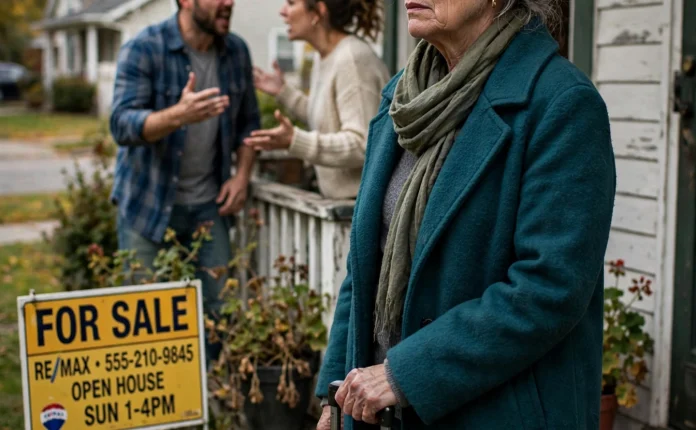
She was going to take the house too. The house I bought with my signing bonus. The house where we were going to raise children.
I filed for divorce that week. I submitted the video, the bank records, everything. Alina didn’t contest. She couldn’t.
The divorce took four months — the same length as the affair, a symmetry I did not appreciate. I got the house. I got full custody of our dog, the only innocent in the entire story. The court ordered Alina to repay twelve thousand of the eighteen thousand dollars.
Derek was fired when his company found out. Last anyone heard, he was working retail two towns over. I felt nothing when I heard that. I had expected to feel something — satisfaction, maybe. There was nothing there.
Here is the part I don’t tell at barbecues. The betrayal broke something in me that the deployment hadn’t. I stopped eating. I stopped talking. I would sit in the house — my house, the one I’d fought to keep — and stare at the couch where his jacket had been. My unit noticed. Soldiers notice when one of their own goes quiet.
My sergeant major pulled me aside one day. He was a man with twenty-six years in and a face like carved wood. He said, “Son, she didn’t break you. She revealed herself. There’s a difference.”
I started therapy through the VA. No shame in it — that’s what the sergeant major said, and I believed him because he was the kind of man who didn’t say things he didn’t mean. I started running again, five miles before dawn, the way I used to. I fixed up the house. New paint. New locks. New life. I threw away the couch. I burned the sheets. Some things you don’t keep.
Six months later, I was at a barbecue at a friend’s house. A friend’s sister was there — a teacher named Priya. She asked about the scar on my forearm, and I told her. Not the whole story, not then. Just enough. She listened the way people listen when they actually care about the answer.
We’ve been together a year now. She knows everything — the video, the money, the house. She says the bravest thing I did wasn’t the recording. It was the walking away.
I still have the flowers I brought home that day. They’re pressed in a book on my shelf. Not as a memory of Alina — as a reminder. I came home with love in my hands. That was never the problem. Who I brought it to was.
If you’re deployed right now, or loving someone who is: trust, but verify. Check the account. Ask the questions. And if they break it — walk away the way I did. With your head up and your duffel bag on your shoulder.
There’s someone out there who will be worthy of the flowers.