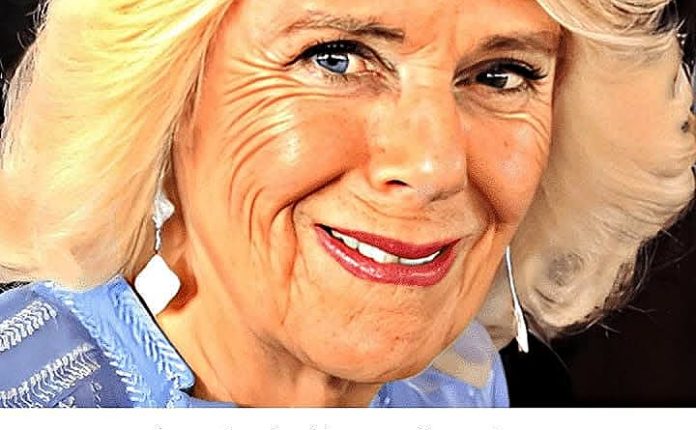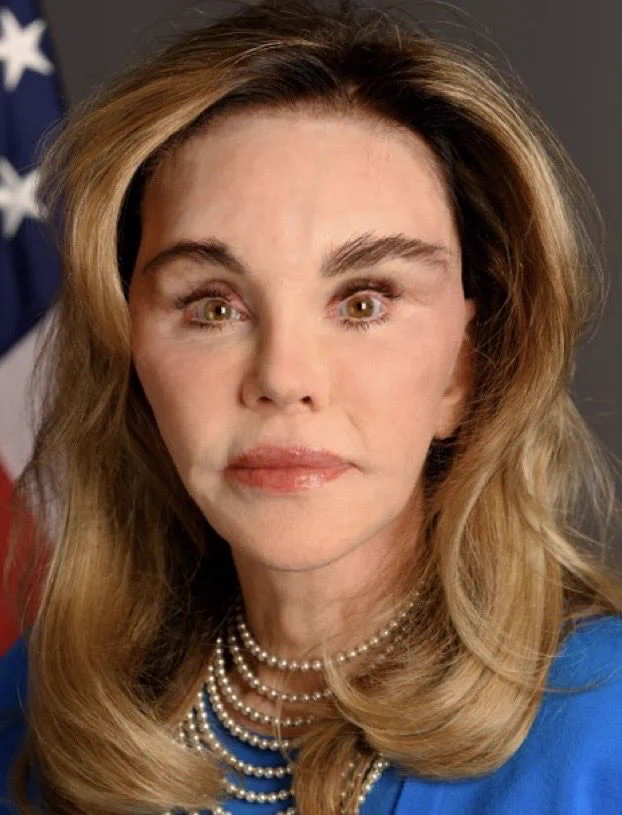
A headline comparing a Trump official’s appearance with Susan Dell’s is designed to provoke an immediate reaction. With the phrase “doesn’t look real,” the focus shifts away from the person’s public role and toward an examination of her face. But a striking photograph is not proof of a cosmetic history—and a forceful comparison is not the same as verified reporting.
The appeal of an appearance-driven headline is easy to understand. Readers do not need to know anything about an official’s responsibilities or background to participate. They can look at a photograph and form an opinion in seconds.
What takes longer is separating that first impression from something that can reasonably be stated as fact.
A portrait might appear unusually polished. Makeup may look dramatic. Facial features may seem different from those in another photograph. None of those observations, by itself, establishes why someone looks the way they do.
In this case, the supporting material does not substantiate the headline’s central claim about a Trump official. That limitation matters, particularly when the language encourages readers to draw conclusions about someone’s body or private medical choices.
The more revealing story is the framing itself: how a photograph becomes a spectacle, how a comparison lends weight to speculation, and how quickly appearance can displace substance.
Key Highlights
- The comparison remains unverified. The material supplied does not establish the original headline’s claim about a Trump official.
- A portrait cannot reveal a complete cosmetic history. Lighting, expression, makeup and photographic choices can all influence appearance.
- “Doesn’t look real” is an opinion, not a diagnosis. It can suggest several different things without clearly establishing any of them.
- Before-and-after images have important limitations. Photographs taken under different conditions are not controlled evidence.
- Public accountability should remain grounded in actions. A person’s appearance does not establish their qualifications, judgment or professional record.
A Headline That Invites Readers to Judge Before They Know the Context

The wording “puts Susan Dell to shame” does more than compare two people. It establishes a competition in which the reader is expected to decide whose appearance is more remarkable, more excessive or less natural.
That is a powerful editorial choice.
Before the subject’s work has been explained, her face has already become the main event. The comparison supplies an emotional direction: readers are not simply being asked to notice the photograph, but to find something extraordinary about it.
The phrase also leaves the standard of judgment unclear. Is the criticism directed at the styling, the quality of the portrait, the expression or an assumed cosmetic procedure?
Without a precise explanation, those possibilities blur together. A subjective response to an image can begin to sound like a factual conclusion about the person pictured.
That is where careful wording becomes important. Describing how a photograph looks is one thing. Claiming to know why a face looks that way is another.

What an Official-Style Portrait Actually Shows
A formal portrait is a constructed presentation.
The subject’s clothing, posture, expression and surroundings all contribute to the impression it creates. A flag in the background can suggest institutional authority. Jewellery and a coordinated outfit can reinforce a polished appearance. A fixed pose can communicate seriousness.
Those details are visible and can be discussed without guessing about private matters.
What a portrait cannot reliably show is how the person looks in every other setting. A single frame does not capture the movement of a face during conversation, the changes produced by different expressions or the effect of ordinary daylight.
Treating that frame as a complete representation of someone’s appearance gives it more authority than it deserves.
It is better understood as one image, taken under particular conditions, for a particular purpose.

Why Lighting and Makeup Can Change the Impression of a Face
Lighting is one of the most important variables in portrait photography.
Bright, frontal light can soften shadows and reduce the visibility of texture. Light from the side can emphasize contours, making cheekbones, the nose or the jaw appear more pronounced. Strong contrast can produce a very different impression from soft, even illumination.
Makeup adds another layer.
Contouring changes the apparent relationship between light and shadow. Eye makeup can alter how large or lifted the eyes appear. Lip colour and definition can affect the perceived shape of the mouth.
These are explanations of how images work—not claims about what happened in this particular photograph.
The distinction matters because even a reasonable possibility can become misleading if it is presented as a confirmed explanation. Without information about how the image was produced, certainty is not justified.
A viewer may find the result dramatic or unfamiliar. That reaction does not establish a procedure.
The Many Meanings Hidden Inside ‘Doesn’t Look Real’
“Doesn’t look real” is an especially slippery phrase because it can refer to the photograph, the styling or the person.
Someone might use it to describe an image that appears heavily retouched. Another viewer might mean that the makeup looks theatrical. A third might be implying cosmetic treatment without saying so directly.
Those are separate claims, and they require separate evidence.
An assessment of image editing would need information about the photograph. A claim about medical treatment would need credible confirmation concerning the individual. Neither can be established simply by repeating a reaction.
The phrase can nevertheless feel persuasive because it is vivid. It gives readers a memorable description before supplying a clear explanation.
That makes it effective headline language, but not a reliable foundation for a factual conclusion.
Why a Before-and-After Picture Is Not the Whole Story
Two photographs placed next to each other can create an immediate sense that a mystery has been solved.
The arrangement encourages the viewer to look for changes. Once those changes are noticed, it can be tempting to assume that their cause is obvious.
But the comparison may involve pictures taken years apart, with different cameras, lenses, expressions and lighting. Hairstyles can change how the face is framed. Makeup can emphasize different features. The angle of the head can affect the apparent shape of the jaw and neck.
Ordinary changes over time also need to be considered.
None of this means that visible differences should be denied. It means the existence of a difference does not automatically establish its explanation.
A side-by-side image can illustrate a question. It cannot independently provide a medical answer.
How a Comparison Can Make Speculation Seem Established
Linking one public figure’s appearance to another can create an impression of shared context, even when the comparison has not been properly documented.
The second name becomes a shortcut. Readers may assume there is an established category, a known pattern or an agreed interpretation.
That assumption deserves scrutiny.
Two people can be placed in the same headline without there being meaningful evidence connecting their circumstances. Similar styling does not establish similar choices. A resemblance does not establish a shared medical history.
The comparison may work rhetorically while adding little factual value.
For readers, the useful question is not simply whether the two photographs look alike. It is whether the connection explains anything that can be verified.
When Appearance Crowds Out Public Accountability
There are legitimate reasons to scrutinize a government official. Their qualifications, decisions, responsibilities and use of authority all deserve attention.
An appearance-led story can leave those questions untouched.
Readers may finish knowing which features attracted criticism while learning nothing about what the official does, how she was selected or how her work affects the public.
That is not a stronger form of accountability. It is a different subject.
Public presentation can still be examined thoughtfully. Portraits communicate authority, professionalism and identity. The choices behind them can be discussed without suggesting that a face reveals competence or character.
The most useful scrutiny keeps those categories separate.
What Responsible Coverage Would Need to Establish
A well-supported version of the original story would need to answer several basic questions.
Who is the official? What is the original source of the photograph? Who made the quoted remark, and in what context? Is there evidence of a substantial public response, or only a handful of selected comments?
Any claim about cosmetic treatment would require additional, credible confirmation. An observer’s impression would not be enough.
These questions are not obstacles to telling an engaging story. They are what allow the story to distinguish documented events from interpretation.
Without those answers, confident language risks giving readers a level of certainty the evidence does not support.
The Bottom Line: A Strong Reaction Is Not Strong Evidence
The original headline promises a dramatic comparison. What the supplied material supports is a more cautious discussion about the way appearance is framed and judged.
A photograph can be striking. Styling can be bold. Readers can dislike the result or find it unfamiliar.
But those reactions do not establish a private medical history, prove image manipulation or reveal a person’s professional worth.
The distinction is simple, even when sensational wording obscures it: what an image makes someone think is not necessarily what the image proves.