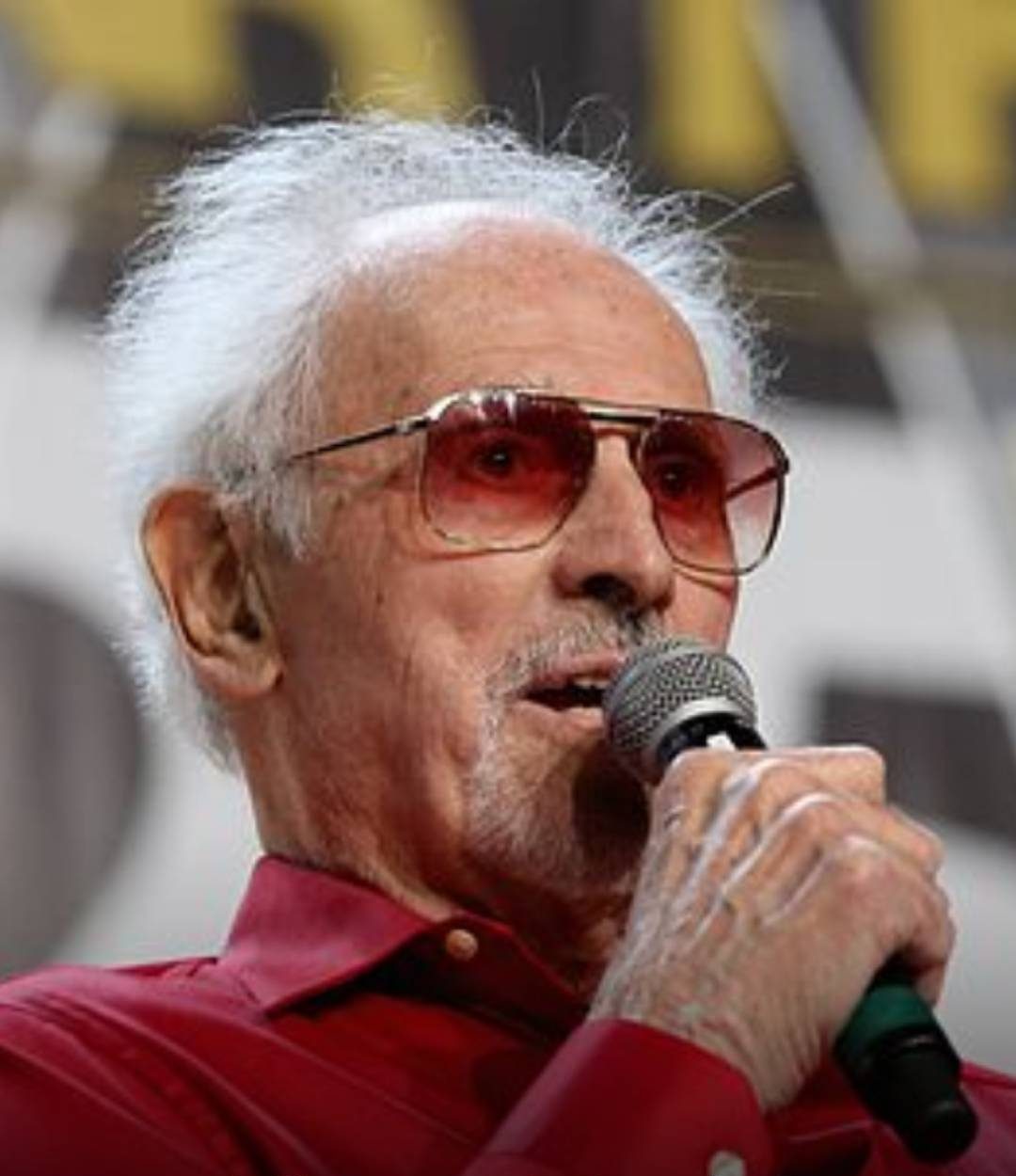
Michael Forest, the actor whose portrayal of Apollo became one of the best-known guest performances in Star Trek: The Original Series, has been reported dead at 97. His work extended across film, television, stage and international productions, with a career that began decades before his best-known appearance and continued long after it.
The Hollywood Reporter said Forest died on October 14, 2026. It reported that he had been living at a senior facility in Sparks, Nevada, and that his friend James A. Brown announced his death.
• Forest’s death was reported by The Hollywood Reporter, which said he died October 14
• The report said he had been living at a senior facility in Sparks, Nevada
• No cause of death was disclosed
• Forest was known to generations of viewers for playing Apollo in Star Trek: The Original Series
• His career also included Roger Corman films, classic television, theater and international dubbing work
• He returned to the role of Apollo in the fan-produced series Star Trek Continues in 2013
A long career behind the headline
What has been reported about his death
The available account gives Forest’s age, the reported date of his death and the fact that he had been living in Sparks. It does not describe what happened in his final hours or provide further circumstances. Brown’s announcement, as quoted by the Daily Express, confirmed the death but did not include additional details.
The distinction is important: a report of someone’s death does not establish its medical cause. Without further information from family, representatives or another reliable source, more specific explanations would be speculation.
No cause of death has been disclosed
The reports reviewed do not say why Forest died. They do not identify an illness, injury or other medical event, and they do not state that his death followed a particular health condition. His age and reported residence are not evidence of a cause.
For now, the most accurate account is limited: Forest was reported to have died at 97, and the cause has not been made public in the reporting reviewed.
A friend shared the announcement
Brown’s message identified Forest by his professional name and his birth name, Gerald Michael Charlebois. He described Forest as a friend as well as an actor. The short announcement conveyed the personal loss but did not offer a biography or explain the circumstances of the death.
The announcement brought renewed attention to a performer whose credits ranged widely, even though one role—Apollo—remained the one most readily associated with his name.
Apollo became his signature role
Forest played Apollo in the second season of Star Trek: The Original Series. In “Who Mourns for Adonais?,” the Enterprise crew encounters a figure who claims to be the Greek god Apollo and demands their worship. Forest’s performance anchored the episode’s central conflict between the character’s claim to authority and the crew’s refusal to accept it.
StarTrek.com has described Apollo as Forest’s most famous acting role. The character’s grand presence made the part a natural fit for an actor who had performed classical theater, but Forest later emphasized that his career included work he valued beyond the Star Trek episode.
The episode that introduced him to generations of fans
“Who Mourns for Adonais?” first aired in 1967. The episode drew on Greek mythology and placed its legendary figure in the world of the Enterprise, creating a story that could move between science fiction, classical references and questions about power and belief.
For viewers who encountered the series in later years, the episode became an enduring part of the show’s catalogue. Forest’s role gave the story a central figure whose appearance and demands shaped the action from the moment Apollo appeared on screen.
Stage experience helped shape the performance
Forest’s background included Shakespeare and other stage work. He played Othello three times and appeared as Petruchio in The Taming of the Shrew at the Old Globe in San Diego. His experience with classical roles was relevant to Apollo, a character written with a theatrical scale and a connection to ancient Greek stories.
In an interview with StarTrek.com, Forest said he drew on earlier stage roles when developing Apollo. He treated the character not only as a godlike figure but as a man with recognizable human qualities—an approach that gave the performance more dimension than spectacle alone.
From Gerald Michael Charlebois to Michael Forest
Forest was born Gerald Michael Charlebois on April 17, 1929, in Harvey, North Dakota. In an interview, he said he changed his professional name after casting professionals had difficulty spelling and pronouncing “Charlebois.” He eventually chose Michael Forest, the name under which audiences came to know his work.
The change was a practical decision early in a career built around auditions and screen work. It became the name attached to his film, television and stage credits—and, eventually, to the Apollo performance that remained closely linked to him.
Early film work with Roger Corman
Forest’s early screen career included several films associated with Roger Corman. Among them were The Saga of the Viking Women and Their Voyage to the Waters of the Great Sea Serpent (1957), Beast From Haunted Cave (1959), Ski Troop Attack (1960) and Atlas (1960).
Those productions established an early pattern in Forest’s career: he moved among genres and formats, taking roles in independent films while continuing to build experience as a stage and television actor. The work also placed him in a period of low-budget filmmaking that later developed a dedicated following.
A steady presence on classic television
Forest appeared in a broad range of television series. His credits included the Twilight Zone episode “Black Leather Jackets” and The Dick Van Dyke Show, along with Westerns, dramas and adventure programs. The work made him a familiar guest actor across several types of American television.
That variety is part of what made his career longer and broader than a single famous role suggests. While Apollo remains the performance most strongly associated with him, his television work placed him in shows with different audiences, settings and styles.
International films expanded his résumé
Forest also worked outside the United States. The Hollywood Reporter reported that he appeared in more than 20 films made in Spain, France and England. One was 100 Rifles (1969), which starred Jim Brown and Raquel Welch.
The overseas projects extended a screen career already moving between independent films, network television and stage performances. They also led into another substantial part of his working life: dubbing films for audiences in other languages.
Hundreds of films dubbed while living in Rome
Forest was fluent in Italian and worked as a film dubber while living in Rome from 1968 to 1978. The Hollywood Reporter credited him with dubbing more than 500 films during that decade, a large body of work that often went unseen by audiences who knew only the finished localized versions.
Dubbing demanded a different set of skills from on-camera acting, including timing dialogue to match an existing performance and delivering lines in another language. It added a major behind-the-scenes dimension to a career already spanning film, television and theater.
Returning to Apollo in 2013
Nearly five decades after the original Star Trek episode, Forest returned to the role in the fan-produced series Star Trek Continues. The 2013 appearance brought him back to Apollo, the character that had become his best-known link to the franchise.
His wife, actress Diana Hale, appeared alongside him as Athena. The reunion connected Forest’s later work with the role that had first introduced him to many fans, while giving viewers a chance to see him revisit the character decades after the original broadcast.
Later screen roles and continued work
Forest’s film credits continued into later decades. They included Body of Evidence (1993) and Cast Away (2000), among other productions. These roles came after years of work in television, independent film and stage performance.
His career did not follow a single track from one breakout role to another. Instead, it included recurring changes in medium, genre and location—a path familiar to character actors whose work accumulates across many productions rather than being defined by one leading part.
A long partnership with Diana Hale
Forest and Hale were married for 52 years, according to The Hollywood Reporter. Hale, also an actress, died in 2022. Their later appearance together in Star Trek Continues brought the couple into the same production and reunited Forest with Apollo for a new generation of franchise viewers.
Hale’s death preceded the reports of Forest’s death by four years. The available reporting on Forest’s passing does not provide additional details about his final days or his cause of death.
A career larger than one credit
Forest’s legacy is closely tied to Apollo, but the rest of his résumé shows a working actor moving across film, television, theater, international productions and voice work. His career included both popular screen appearances and less visible work, such as dubbing hundreds of films while based in Rome.
For Star Trek viewers, he remains the actor who gave Apollo a human presence. For audiences who encountered his other work, he was a familiar performer across classic television and film. The reported death at 97 marks the end of a career that extended far beyond the single episode for which he is most widely remembered.