
Instability and mistreatment can transform even the most modest child into something unrecognizable. Charles Manson, whose name became synonymous with one of America’s most infamous crime sprees, is one of the few lives that most clearly illustrates that pattern.

Manson was born in Cincinnati in 1934 to a woman who was sixteen years old. His early years were characterized by chaos and abandonment. Due to his mother’s incarceration for robbery and the absence of his father, he was constantly moving between relatives and makeshift residences.
Brief periods of stability never lasted. Alcohol abuse and neglect defined much of his childhood. By his preteen years, truancy, theft, and arson accusations followed him into reform schools and juvenile detention centers.

Institutions meant to correct his behavior instead reinforced it. He ran away repeatedly, committed escalating crimes, and learned manipulation as a survival tool. Psychological evaluations described him as aggressively antisocial.
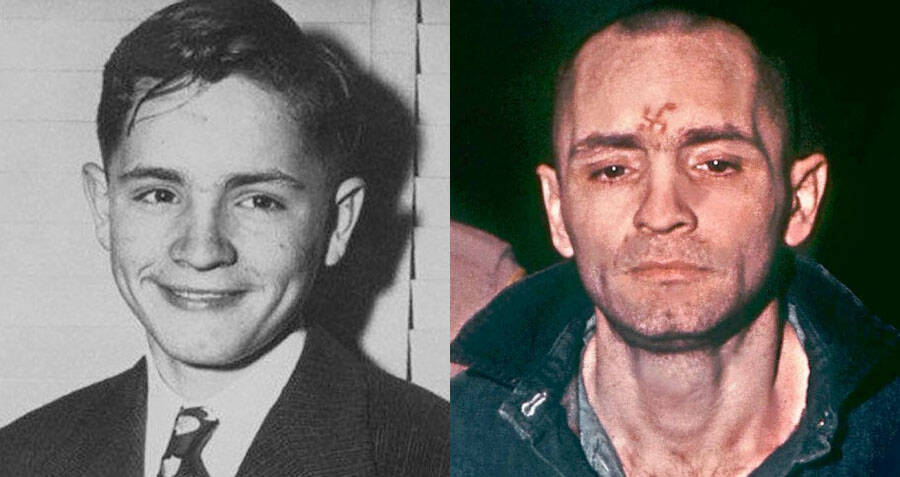
By the late 1960s, Manson had gathered a group of devoted followers later known as the “Manson Family.” He promoted a distorted apocalyptic ideology he called “Helter Skelter,” claiming it foretold a coming race war.
In August 1969, his followers murdered actress Sharon Tate and others, followed by the killings of Leno and Rosemary LaBianca. Though he did not personally commit the murders, he was convicted of orchestrating them.
He was given a death sentence in 1971, but after California abolished the death penalty, his sentence was eventually lowered to life in prison. Manson left behind a legacy of brutality, deceit, and lasting cultural notoriety when he passed away in prison in 2017.